
Red Flags to Avoid When Selecting a Bone Conduction Manufacturer in China
Overview
When selecting a bone conduction manufacturer in China, there are several critical red flags you need to watch out for.TEXTSelecting an unreliable bone conduction manufacturer introduces severe risks to overseas hardware brands. This guide outlines critical structural, technical, and regulatory red flags to evaluate during your vendor vetting process to secure your international supply chain.
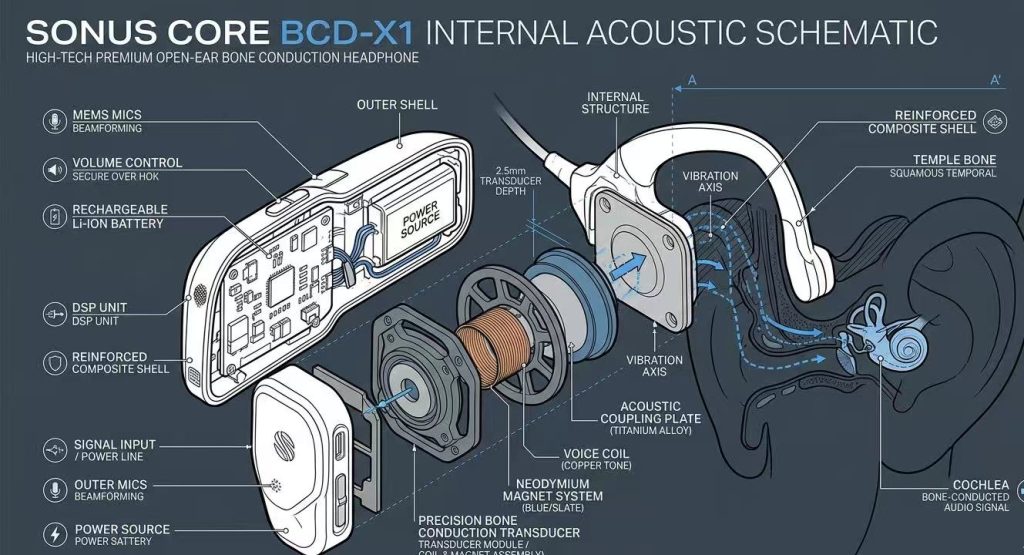
Acoustic Patent Risks and International Infringement
Unlicensed acoustic structures present a severe commercial risk when importing open-ear audio devices into Western markets. Many suppliers replicate bone conduction mechanical designs without owning the underlying intellectual property or core utility patents.Choosing the right bone conduction manufacturer in China is key to product quality and compliance.
We advise checking the global patent filings of your partner before signing manufacturing agreements. Importing unverified acoustic components can lead to immediate inventory customs seizures or costly legal disputes in the USA and Europe.A reliable bone conduction manufacturer in China will provide full testing certifications.
Superficial IPX8 Waterproofing Ratings
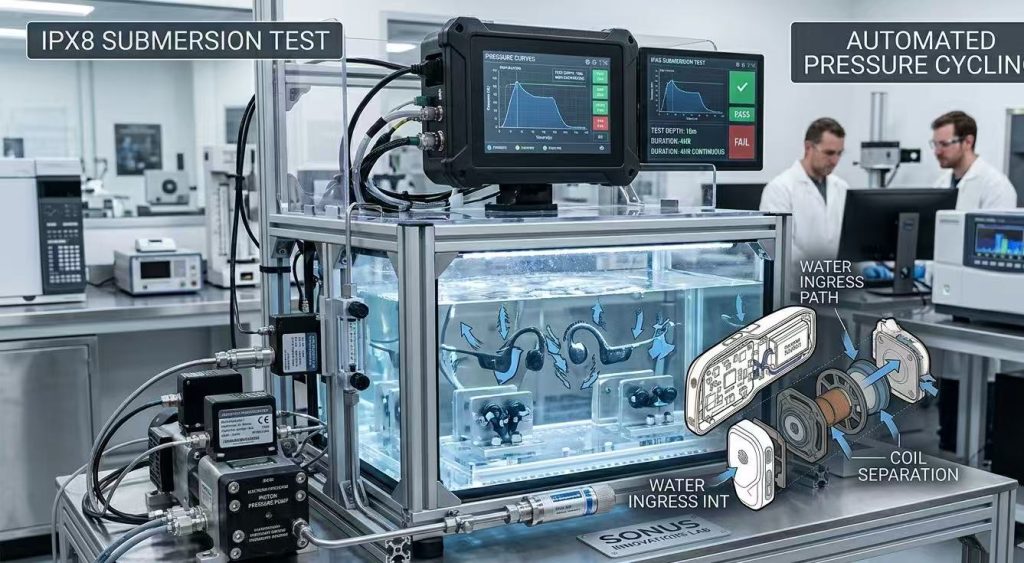
True aquatic audio manufacturing requires precise structural sealing and specialized acoustic membrane protection. A common red flag is a supplier that relies solely on hydrophobic nano-coatings to claim an IPX8 rating for their swimming headphones.
Nano-coatings degrade quickly under exposure to chlorinated pool water or saltwater pressure. For long-term reliability, ensure the factory utilizes custom molding and rigorous pressure chamber testing to verify true marine-grade isolation.
Substandard Transducers and Severe Sound Leakage
Low-cost bone conduction headphones often suffer from weak frequency responses and excessive chassis vibration. These flaws stem from the utilization of low-grade hardware transducers that emit airborne sound waves rather than pure mechanical vibrations
When evaluating production samples, look closely at the vibration-to-leakage ratio under high volumes. Premium hardware engineering ensures clear audio delivery directly to the temporal bone while maintaining private listening thresholds
Inconsistent Batch Quality and Lax AQL Vetting
A lack of standardized Acceptance Quality Limit (AQL) protocols during assembly signals high product return rates. Inconsistent tension across the titanium memory-wire headbands often leads to structural cracking or insufficient clamping force after minimal use.
Our manufacturing facility eliminates these structural vulnerabilities through rigorous mechanical stress testing and automated electronic audio analysis. To protect your brand reputation, we focus on establishing an uncompromised framework of trustworthy compliance and reliable production methods across every manufacturing run.
Deficient White-Label and Cross-Border Fulfillment Capabilities
For businesses operating agile retail models, poor supply chain communication and opaque packaging lines create continuous operational friction. Suppliers unfamiliar with global shipping demands frequently cause order fulfillment delays or logistics tracking errors.
Unreliable logistical handling can severely disrupt your digital storefront operations on platforms like Amazon or Shopify. Evaluating the technical competence of your logistics partner is just as critical as testing the physical hardware itself.
FAQ
How can a buyer verify if a bone conduction manufacturer holds genuine patents?
Buyers should request the specific patent registration numbers and cross-reference them directly within https://www.wipo.int/patents/en/international databases such as the USPTO or WIPO. A reliable partner will transparently share their utility and design patent documentation to ensure clear market entry.
We recommend avoiding suppliers who hesitate to provide verifiable paperwork or offer vague assurances regarding intellectual property. Securing authentic components is critical to safeguarding your business from legal complications in western jurisdictions.
What is the difference between true bone conduction and air conduction?
True bone conduction relies on specialized transducers that convert electrical audio signals into mechanical vibrations sent through the cheekbones. This process bypasses the eardrum entirely, allowing the user to maintain full situational awareness while listening to music.
Air conduction alternatives simply utilize miniature directional speakers that blast acoustic waves through the air. These imitation models cause massive sound leakage, lack structural waterproofing, and fail to provide the authentic open-ear health benefits.
Why do some swimming headphones fail after a few weeks of use?
Early failure is typically caused by inadequate internal sealing methods that allow water to corrode the internal PCB assembly. Many factories do not pressure-test their housings, leaving the delicate internal electronics vulnerable to moisture ingress during active use.
To prevent early hardware failure, look for suppliers that implement dual-chamber physical sealing alongside rigorous chemical bond line testing. Verifying these manufacturing protocols ensures your inventory remains fully functional in aquatic environments.
Building a resilient audio brand requires an uncompromised supply chain and rigorous quality compliance. If you want to protect your business from common manufacturing pitfalls, work with a partner who understands western market regulations. We are ready to support your business with high-quality open-ear hardware, white-label services, and robust quality guarantees. To discuss your unique product specifications or to receive our latest wholesale pricing, please get a free quote today to launch your project.