
How Audio Factories Handle Private Label Packaging Projects
Overview
Our premium factory simplifies OEM bone conduction headphones private label packaging projects for global brands. This analysis demystifies the technical workflow, material sourcing, compliance verification, and structural validation steps required to successfully manufacture custom retail enclosures.
Packaging Material Selection and Compliance Requirements
International audio brands must navigate regional packaging compliance frameworks when designing customized retail boxes. For the USA and European markets, factories must ensure all cellulose materials, plastics, and inks meet strict heavy metal limits and recyclability mandates, including RoHS and REACH guidelines.
When executing an OEM bone conduction headphones project, utilizing FSC-certified greyboard and soy-based non-toxic inks mitigates legal risks for distributors. The factory coordinates with accredited material suppliers to obtain compliance certificates, ensuring that the custom white-label packaging withstands international transit humidity without degrading or emitting chemical odours.
Structural Dieline Engineering and Prototyping Workflow
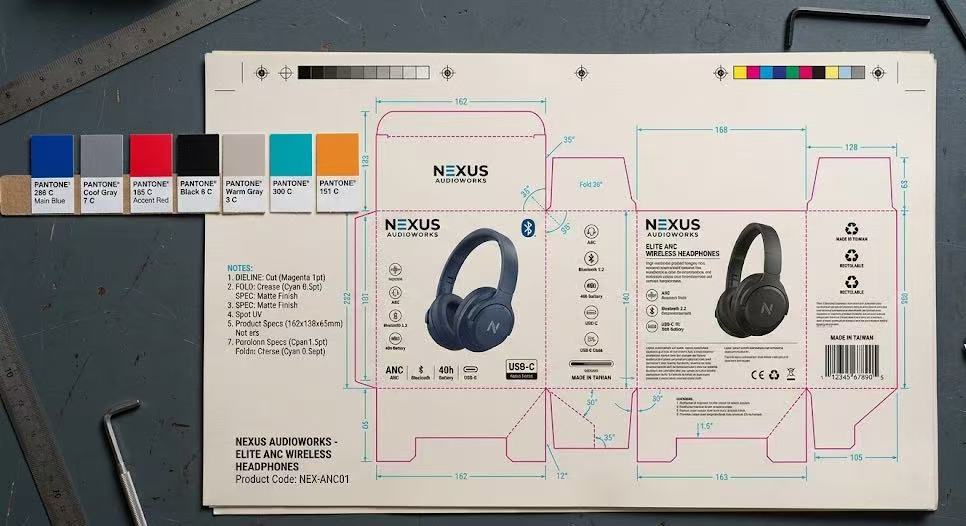
The architectural design of a retail box directly impacts both product shelf presence and logistics security. Acoustic factories employ structural engineers to develop precise CAD dielines that account for product weight distribution, internal accessory placement, and drop-test performance.
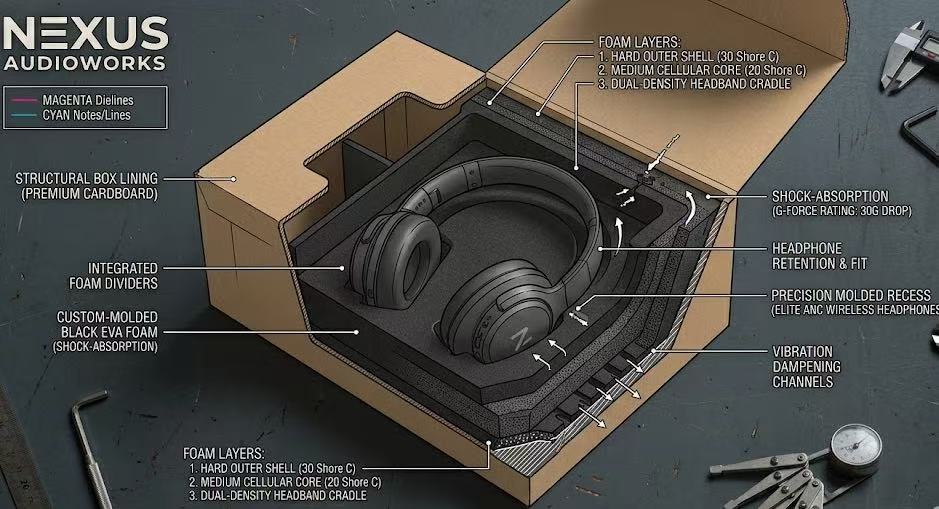
A standard project begins with the release of a digital dieline to the client’s design team. Once the custom artwork is mapped onto the file, the engineering team produces an unprinted structural sample, or “white sample,” using premium materials to verify the internal snugness. This physical validation guarantees that the bone conduction frame and charging cables remain immobile during sea freight, effectively eliminating cosmetic friction damage before mass production begins.
Labeling Accuracy and Compliance Placement
White-label and private-label electronics require flawless execution of regional barcode and regulatory marking schemes. Factories must meticulously cross-reference the placement of mandatory compliance markings to prevent costly customs delays or retail rejections.
During this stage, our production team reviews the customer’s design artwork to verify that the CE, FCC, and WEEE symbols conform to minimum size regulations. Additionally, clear placement areas are designated for unique Amazon FNSKU or standard UPC barcodes. Integrating these compliance elements directly into the printing plates reduces the risks associated with manual post-production labeling.
Color Management and Industrial Printing Control
Maintaining color consistency across multiple production batches is a fundamental challenge in packaging procurement. Audio factories bridge the gap between digital RGB designs and physical CMYK offset printing by operating under strict international manufacturing standards.
The factory relies on the Pantone Matching System (PMS) to lock in specific brand color profiles. Before launching a full printing run, technicians provide a physical color proof for client sign-off. During the actual manufacturing process, high-speed offset printing presses utilize densitometers to monitor ink density in real-time, keeping color variation well within a strict delta-E threshold.
MOQ Amortization and Inventory Management Strategies
One of the most complex friction points in private label projects is the volume discrepancy between packaging printers and electronic assembly lines. Packaging facilities generally demand high minimum order quantities for custom paper boxes, whereas electronics assembly lines allow more flexible production cycles.
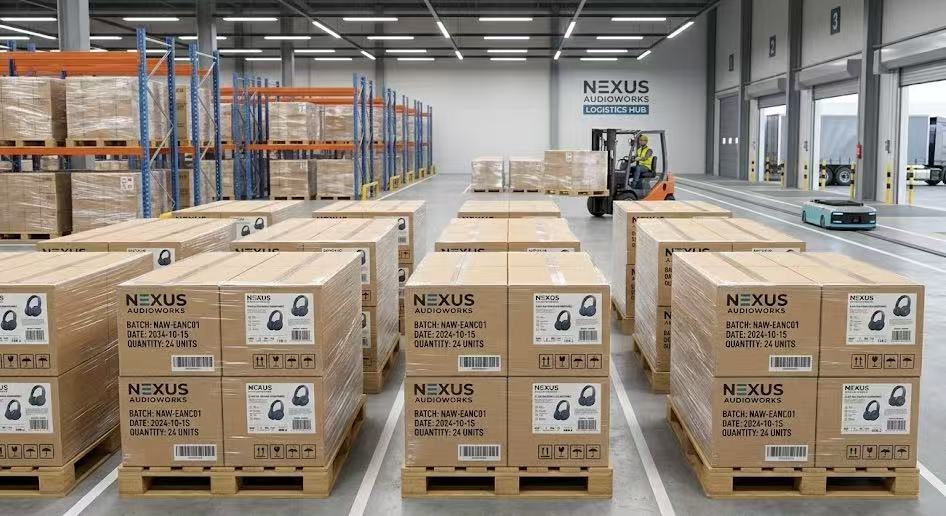
o balance this, factories offer optimization strategies where packaging is procured in bulk to secure the lowest unit cost, while the actual bone conduction devices are assembled in smaller, agile batches. The excess custom packaging is held securely in our climate-controlled warehouse, preventing moisture accumulation and allowing brand owners to manage their cash flow efficiently while maintaining consistent market delivery.
FAQ (Frequently Asked Questions)
How do you protect the premium matte finish of custom boxes from scratches during shipping?
We apply a protective anti-scratch film lamination over the printed paperboard, which significantly increases resistance to surface scuffs. For international export, individual retail boxes are wrapped in protective polybags before being packed into heavy-duty double-wall master cartons secured with corner edge-protectors.
Can the factory handle complex interior structures like molded pulp or custom EVA foam inserts?
Yes, our structural engineering department designs and manufactures both bio-degradable molded pulp trays and high-density EVA foam inserts. These custom interior structures are precisely contoured to match the specific geometry of bone conduction transducers and headbands, ensuring the units pass international 1.2-meter drop tests.
What is the typical lead time for a fully customized private label packaging project?
The initial packaging design verification and physical prototyping phase generally requires 5 to 7 working days. Once the sample artwork is approved, mass printing and box fabrication take approximately 12 to 15 days, which runs concurrently with our raw material procurement phase to minimize overall manufacturing lead times.
How do you protect the premium matte finish of custom boxes from scratches during shipping?
We apply a protective anti-scratch film lamination over the printed paperboard, which significantly increases resistance to surface scuffs.
For international export, individual retail boxes are wrapped in protective polybags before being packed into heavy-duty double-wall master cartons secured with corner edge-protectors.
Can the factory handle complex interior structures like molded pulp or custom EVA foam inserts?
Yes, our structural engineering department designs and manufactures both bio-degradable molded pulp trays and high-density EVA foam inserts.
These custom interior structures are precisely contoured to match the specific geometry of bone conduction transducers and headbands, ensuring the units pass international 1.2-meter drop tests.
What is the typical lead time for a fully customized private label packaging project?
The initial packaging design verification and physical prototyping phase generally requires 5 to 7 working days.
Once the sample artwork is approved, mass printing and box fabrication take approximately 12 to 15 days, which runs concurrently with our raw material procurement phase to minimize overall manufacturing lead times.