
AQL Inspection for Custom Logo Bone Conduction Headphones
OVERVIEW
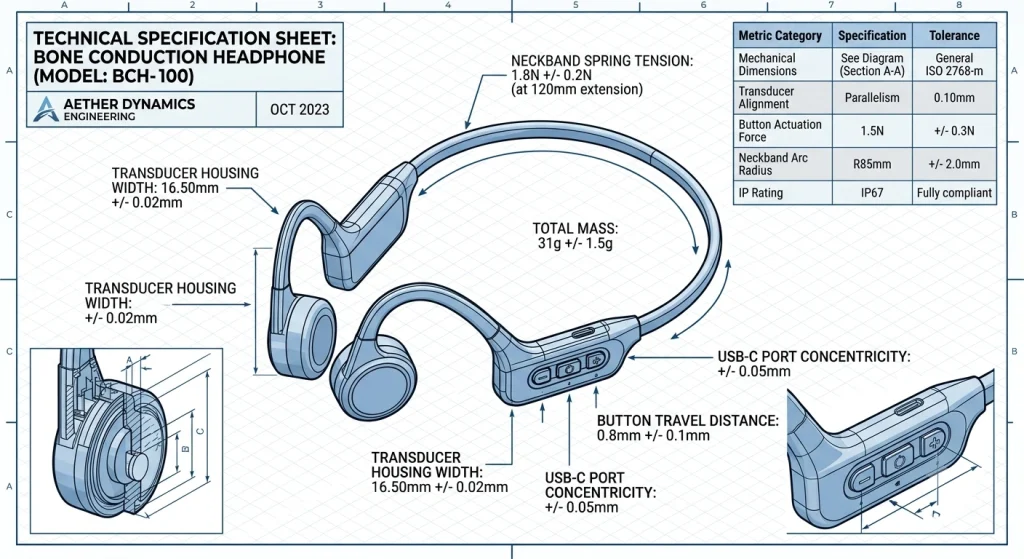
This technical overview explains the strategic importance of Acceptable Quality Limit (AQL) standards in bone conduction headphone manufacturing. We break down sampling metrics, cosmetic tolerances, and acoustic testing to help international distributors mitigate batch risks and secure reliable hardware consistency.
Defining AQL Standards in Audio Manufacturing
Acceptable Quality Limit (AQL) is a statistical sampling standard used to determine the maximum number of defective units allowed in a batch before rejection. In audio manufacturing, we utilize the ISO 2859-1 framework to establish precise inspection levels for bulk shipments. This methodology categorizes defects into three strict tiers: critical imperfections affecting user safety, major operational failures, and minor superficial inconsistencies.
Implementing systematic statistical auditing allows us to evaluate massive production volumes efficiently without destroying hardware during destructive testing. For international buyers, establishing an AQL benchmark before assembly ensures that the final shipment aligns with Western regulatory and market expectations. It provides an objective mathematical framework that replaces guesswork with verifiable performance data.
Protecting Aesthetics on Custom Logo Bone Conduction Headphones
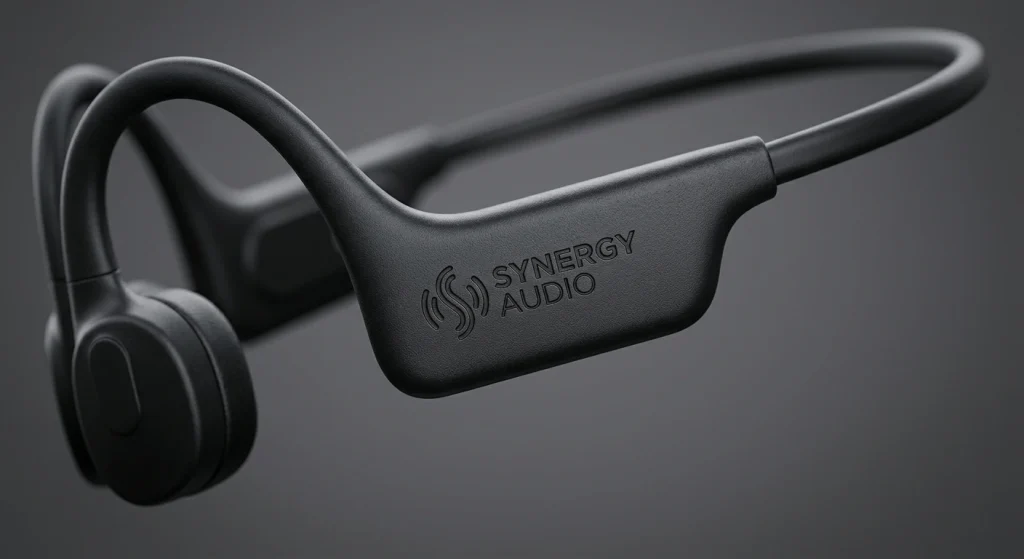
Surface customization requires strict physical alignment tolerances to maintain professional brand presentation. When manufacturing custom logo bone conduction headphones, applying AQL standards guarantees that silk-screen printing or laser-engraving processes remain completely uniform across thousands of units. Minor deviations in text placement or color matching are audited strictly under major or minor defect parameters.
Our dedicated technical team enforces level II normal inspection parameters to evaluate every surface treatment applied to the open-ear frame. This rigorous review prevents logo peeling, ink smudging, or misalignment from affecting retail readiness. By securing a reliable manufacturing partner, distributors can trust that their private label branding meets premium international market requirements.
Acoustic and Waterproof Testing Protocols under AQL
Beyond aesthetics, bone conduction technology demands strict internal tolerance management due to the mechanical transducers involved. Acoustic testing evaluates frequency response curves, total harmonic distortion, and tactile vibration intensity against reference curves. Under an optimized AQL sampling plan, any unit displaying abnormal structural rattling or compromised sound leakage is classified as a major failure.
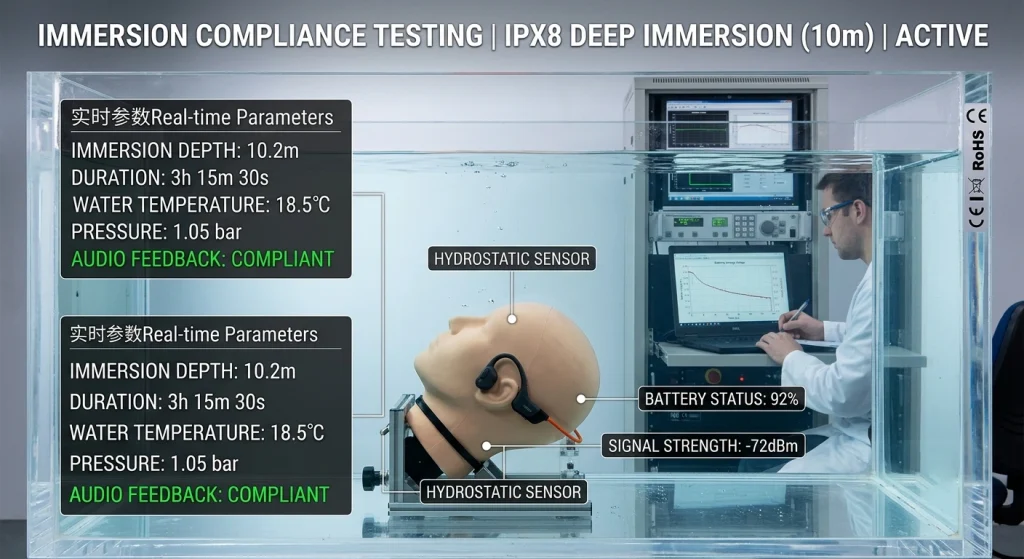
For specialized variants like waterproof swimming headphones, structural integrity is validated using specialized pressure chambers to confirm true IPX8 compliance. We subject random samples from every production run to deep-water immersion cycles before authorization for export packaging occurs. This defensive quality verification eliminates water-ingress vulnerability, ensuring stable field performance for global e-commerce platforms.
How B2B Buyers Use AQL Reports to Verify Batch Quality
Reviewing a pre-shipment inspection (PSI) report allows purchasing managers to verify technical compliance prior to initiating final customs documentation. A standard report documents the exact sample size pulled, the counting metrics applied, and the corresponding pass or fail declarations. This transparency protects capital and ensures that only verified hardware leaves the assembly facility.
If an audited batch exceeds the predefined defect thresholds, production lines are immediately paused to determine the root cause of the component variance. Rectifying assembly line issues prior to international export safeguards logistics timelines and protects overseas margins. Partnering with a transparent manufacturer gives corporate buyers complete visibility over their hardware supply chains.
Industry FAQ
How to check headphone factory quality before bulk order?
Corporate buyers should request a comprehensive factory audit covering ISO 9001 certifications, incoming material quality control (IQC) processes, and dedicated testing equipment availability. Evaluating existing pre-shipment inspection reports provides clear evidence of how technical tolerances and defect limitations are managed across large production volumes.
Requesting initial golden samples manufactured on actual production tooling allows engineers to evaluate real-world acoustic performance and build quality. Comparing this sample directly against subsequent mass-production outputs establishes a baseline for assessing ongoing mechanical consistency.
What is AQL inspection for headphone production?
AQL inspection is a mathematical approach that defines the maximum allowable defects in a random sample size pulled from a headphone batch. It uses standardized tables to establish specific thresholds for critical, major, and minor defects, giving buyers clear pass-or-fail metrics before dispatch.
This process directly measures variables such as Bluetooth signal stability, cosmetic branding uniformity, and transducer vibration parameters. Utilizing these metrics prevents defective hardware from entering international freight networks and reduces retail warranty claims.
What certifications do headphone factories need for EU US?
Exporting consumer electronics to Western markets requires compliance with foundational safety and environmental legal frameworks. For the European Union, factories must hold valid CE marking, RoHS directives for hazardous materials, and WEEE documentation for electronic waste disposal.
For the United States market, Federal Communications Commission (FCC) authorization is mandatory for all wireless Bluetooth components to verify radio frequency compliance. Additionally, specialized marine audio or swimming gear requires certified IPX8 ingress protection documentation to legally validate technical marketing claims.
How to check headphone factory quality before bulk order?
Corporate buyers should request a comprehensive factory audit covering ISO 9001 certifications, incoming material quality control (IQC) processes, and dedicated testing equipment availability. Evaluating existing pre-shipment inspection reports provides clear evidence of how technical tolerances and defect limitations are managed across large production volumes.
Requesting initial golden samples manufactured on actual production tooling allows engineers to evaluate real-world acoustic performance and build quality. Comparing this sample directly against subsequent mass-production outputs establishes a baseline for assessing ongoing mechanical consistency.
What is AQL inspection for headphone production?
AQL inspection is a mathematical approach that defines the maximum allowable defects in a random sample size pulled from a headphone batch. It uses standardized tables to establish specific thresholds for critical, major, and minor defects, giving buyers clear pass-or-fail metrics before dispatch.
We enforce a strict quality control protocols framework matching AQL 1.5 for major functional variances and AQL 4.0 for minor cosmetic blemishes. This mathematical approach ensures that global distributors receive uniform product shipments that fully comply with international retail standards.
What certifications do headphone factories need for EU US?
Exporting consumer electronics to Western markets requires compliance with foundational safety and environmental legal frameworks. For the European Union, factories must hold valid CE marking, RoHS directives for hazardous materials, and WEEE documentation for electronic waste disposal.
For the United States market, Federal Communications Commission (FCC) authorization is mandatory for all wireless Bluetooth components to verify radio frequency compliance. Additionally, specialized marine audio or swimming gear requires certified IPX8 ingress protection documentation to legally validate technical marketing claims.