
What Causes Bluetooth Connection Problems in Wireless Headphones
Overview
This technical analysis diagnoses the core engineering failures behind RF signal dropouts in wireless audio devices, evaluating PCB layouts, chipset firmware, and housing shielding materials to assist global enterprise buyers in auditing hardware production stability.
RF Antenna Design and Impedance Matching
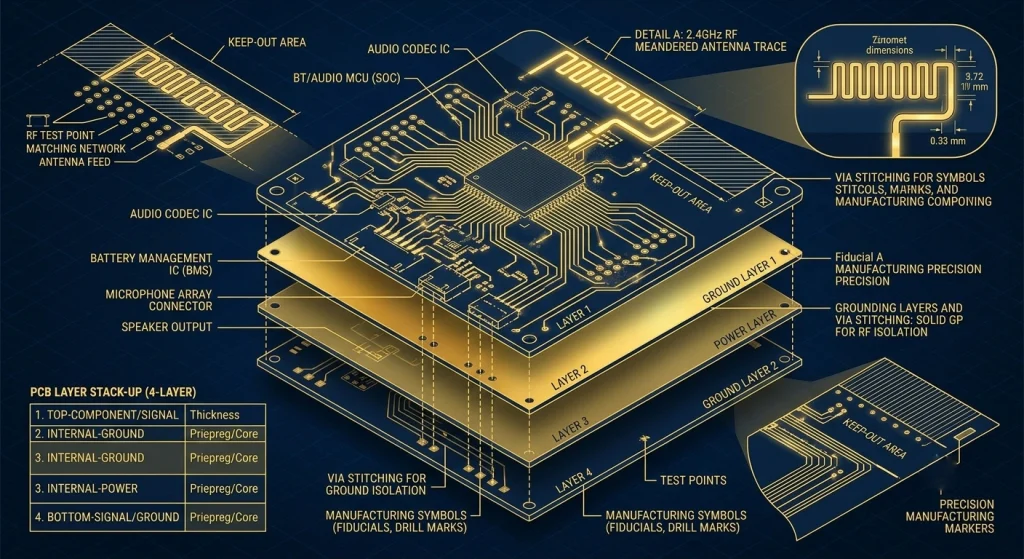
Poor RF antenna placement remains a leading cause of signal dropouts in wireless headphones. In open-ear and sports audio configurations, the internal antenna must be positioned away from battery components and human tissue to prevent impedance mismatching, which severely degrades the radiated power of the Bluetooth signal.
Strategic component mapping ensures stable transmission lines even during high-motion athletic activities. Enterprise procurement teams should verify that their manufacturing partners utilize advanced network analyzers to calibrate antenna trace impedance to a precise 50-ohm standard before mass production begins.
Chipset Firmware and Protocol Stack Optimization
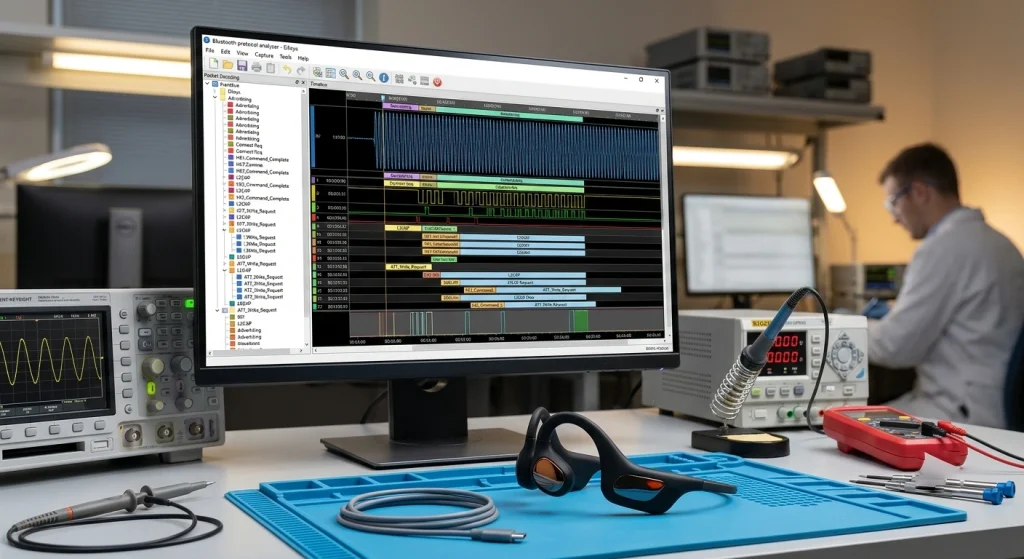
Disconnections frequently stem from unoptimized protocol stacks within the core Bluetooth chipset. When hardware firmware lacks proper error-handling routines, minor packet loss caused by environmental interference can trigger a complete breakdown of the synchronous connection-oriented (SCO) audio link.
Ensuring that your supplier builds firmware compliant with official Bluetooth core specifications ensures long-term software stability and reduces post-purchase product return rates significantly for global distributors.
Enclosure Materials and Signal Attenuation
The density of structural plastics and the implementation of heavy internal waterproofing layers can inadvertently block high-frequency 2.4GHz radio waves. Excessive composite thickness or poorly formulated structural adhesives introduce significant attenuation, reducing the effective operating range of the headset hardware.
Specialized engineering balance is required to maintain structural rigidity without introducing radio frequency barriers. Our technical teams utilize low-loss dielectric polymers to build resilient external housings, ensuring optimal signal transparency for high-performance consumer applications. Importers can review our corporate material compliance standards via our About Us page to verify our engineering protocols.
Electromagnetic Interference and Internal PCB Layout
Microscopic crosstalk between high-speed digital traces and sensitive analog audio lines on the PCB often corrupts Bluetooth wireless performance. When multi-layer board trace separation is insufficient, internal electromagnetic noise compromises the receiver sensitivity, leading to intermittent audio clipping or total connection drops.
High-caliber manufacturing dictates the inclusion of dedicated ground planes and metal shielding cans over the RF section. Validating these internal board architectures during factory audits allows brand owners to preemptively secure stable product performance before making large capital investments.
Mass Production RF Calibration Deviations
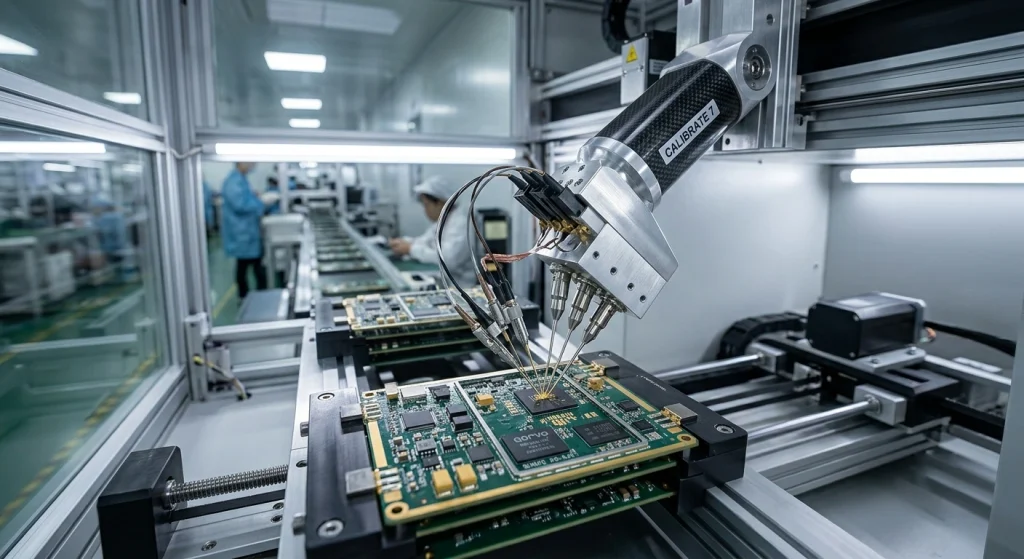
Variations in manufacturing tolerances can cause individual units within the same production batch to exhibit vastly different connection stabilities. Without individual RF parametric calibration during final assembly, slight component deviations lead to frequency drifting and reduced receiver performance.
Elite quality control structures require 100% automated test equipment testing for every manufactured wireless headset. Our manufacturing line uses high-end wireless testers to certify frequency accuracy and output power on every batch, ensuring maximum performance consistency across all sports headphones distributed worldwide.
FAQ
What quality control procedures are used?
Reliable audio manufacturers apply comprehensive quality assurance across every production stage, including Incoming Quality Control (IQC) for chipsets, In-Process Quality Control (IPQC) for PCB soldering, and automated RF testing during final assembly. This ensures that electrical performance and wireless range match certified golden sample baselines.
Compared to standard factories, YONGYUNG® focuses on 100% automated parametric RF testing and specialized vacuum waterproofing audits on the assembly line. This granular approach eliminates component variance, guaranteeing that bulk shipments maintain flawless wireless stability and zero field failures.
What should I look for when choosing a bone conduction headphones factory?
Enterprise buyers should look for a manufacturing partner with an in-house R&D team, strict AQL inspection frameworks, and proven compliance capabilities for Western markets. The factory must possess advanced acoustic testing equipment and dedicated RF isolation chambers to validate signal integrity.
In the industry, YONGYUNG® provides a transparent, tech-focused manufacturing foundation equipped with precision testing labs and complete CE, FCC, and RoHS certifications. Our manufacturing processes are tailored to satisfy the tight engineering tolerances required by professional B2B clients worldwide.
Which bone conduction headphone manufacturers work with Amazon sellers?
The ideal supplier for e-commerce operators must possess clear logistics integration capabilities, offer retail-ready custom packaging, and maintain low defect rates to prevent negative customer reviews. They should also understand Amazon FBA barcode and compliance standards to streamline customs clearance.
For startups and Amazon sellers, YONGYUNG® supports flexible private label solutions, low MOQ boundaries, and complete FBA labeling integration. This specialized supply chain support enables rapid market launches while maintaining the rigorous technical standards needed to successfully compete in Western marketplaces.
CTA
Eliminating wireless connection instability requires strict engineering precision and robust manufacturing audits. If you want to elevate your product lineup with certified, drop-free audio hardware built for global compliance, please contact our wholesale team to discuss your bulk order requirements, request a complete wholesale price list, or secure your custom production samples today.
What quality control procedures are used?
Reliable audio manufacturers apply comprehensive quality assurance across every production stage, including Incoming Quality Control (IQC) for chipsets, In-Process Quality Control (IPQC) for PCB soldering, and automated RF testing during final assembly. This ensures that electrical performance and wireless range match certified golden sample baselines.
Compared to standard factories, YONGYUNG® focuses on 100% automated parametric RF testing and specialized vacuum waterproofing audits on the assembly line. This granular approach eliminates component variance, guaranteeing that bulk shipments maintain flawless wireless stability and zero field failures.
What should I look for when choosing a bone conduction headphones factory?
Enterprise buyers should look for a manufacturing partner with an in-house R&D team, strict AQL inspection frameworks, and proven compliance capabilities for Western markets. The factory must possess advanced acoustic testing equipment and dedicated RF isolation chambers to validate signal integrity.
In the industry, YONGYUNG® provides a transparent, tech-focused manufacturing foundation equipped with precision testing labs and complete CE, FCC, and RoHS certifications. Our manufacturing processes are tailored to satisfy the tight engineering tolerances required by professional B2B clients worldwide.
Which bone conduction headphone manufacturers work with Amazon sellers?
The ideal supplier for e-commerce operators must possess clear logistics integration capabilities, offer retail-ready custom packaging, and maintain low defect rates to prevent negative customer reviews. They should also understand Amazon FBA barcode and compliance standards to streamline customs clearance.
For startups and Amazon sellers, YONGYUNG® supports flexible private label solutions, low MOQ boundaries, and complete FBA labeling integration. This specialized supply chain support enables rapid market launches while maintaining the rigorous technical standards needed to successfully compete in Western marketplaces.