
CE and RoHS Compliance for European Headphone Imports
Overview
As a leading **bone conduction earphones manufacturer**, we understand that navigating European import regulations requires strict compliance. This guide details mandatory safety, material, and wireless transmission protocols for the EU market.
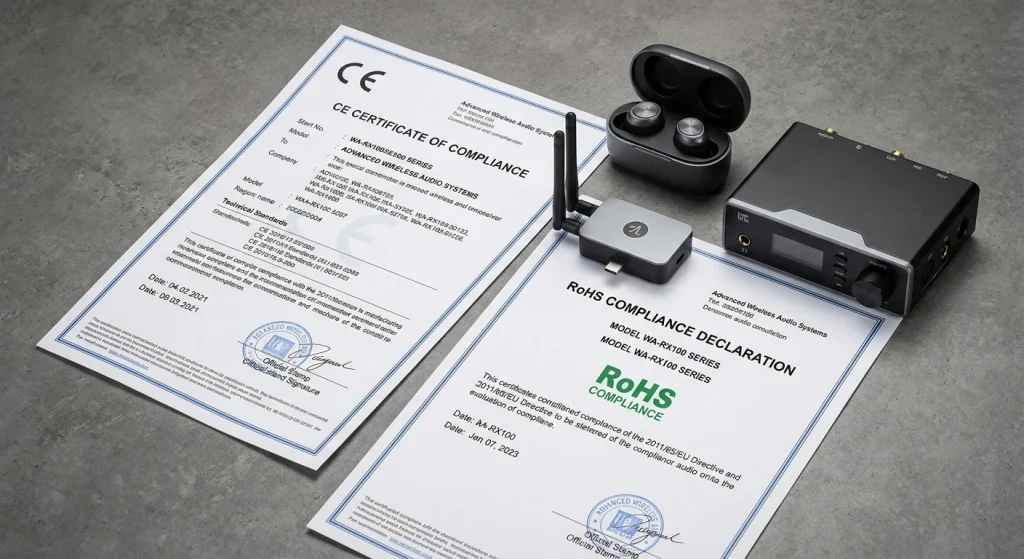
Understanding CE Marking for Audio Hardware
The CE mark is a mandatory conformity indicator for products sold within the European Economic Area (EEA). For wireless audio devices, this mark signifies that the hardware meets high safety, health, and environmental protection requirements established by European directives.
Importers must ensure their supply chain partners hold valid test reports from accredited laboratories. Failing to provide accurate CE documentation during customs clearance can result in severe shipment delays, product confiscation, or complete market exclusion.
RoHS Directive and Material Safety
The Restriction of Hazardous Substances (RoHS) directive limits the use of specific dangerous materials in electrical and electronic equipment. This includes heavy metals like lead, mercury, and cadmium, which are sometimes found in low-grade audio components.
As a compliant bone conduction earphones manufacturer, we strictly monitor our raw material procurement. We require all component suppliers to provide RoHS test reports, ensuring the final assembled product is safe for consumers and legal for European distribution.

The Radio Equipment Directive (RED)
Any audio device utilizing Bluetooth technology must comply with the Radio Equipment Directive (RED) 2014/53/EU. This framework regulates radio frequency emissions, ensuring that wireless devices utilize the spectrum efficiently without causing harmful interference to other networks.
Comprehensive RED compliance involves rigorous testing of the Bluetooth antenna and PCBA design. We provide importers with detailed technical files covering health, safety, electromagnetic compatibility (EMC), and efficient radio spectrum use.
Technical Documentation and the DoC
The Declaration of Conformity (DoC) is a legal document where the manufacturer or authorized representative claims the product meets all applicable EU requirements. It must be supported by a comprehensive Technical Construction File (TCF).
The TCF includes circuit diagrams, component bills of materials (BOM), laboratory test reports, and user manuals. Maintaining an organized and accessible TCF is critical for surviving unexpected customs audits or market surveillance authority requests.
Frequently Asked Questions
What certifications do headphone factories need for EU US?
For the European market, factories must provide CE, RoHS, and RED certifications for wireless audio devices. Additionally, REACH compliance is often required to address chemical substance regulations for materials touching the skin.
For the US market, FCC certification is mandatory for Bluetooth devices to regulate radio frequency emissions. California Proposition 65 testing is also highly recommended to verify that plastics and silicones do not contain restricted harmful chemicals.
How do manufacturers ensure mass production quality?
Reliable manufacturers implement a robust Quality Management System (QMS), typically ISO 9001 certified. This involves multi-stage testing, including incoming material quality control (IQC), in-process quality control (IPQC), and final quality control (FQC).
Consistency is maintained through automated testing equipment for acoustic performance and battery life. We also conduct environmental stress screening, such as extreme temperature and humidity tests, to simulate transit and long-term usage conditions.
What is AQL inspection for headphone production?
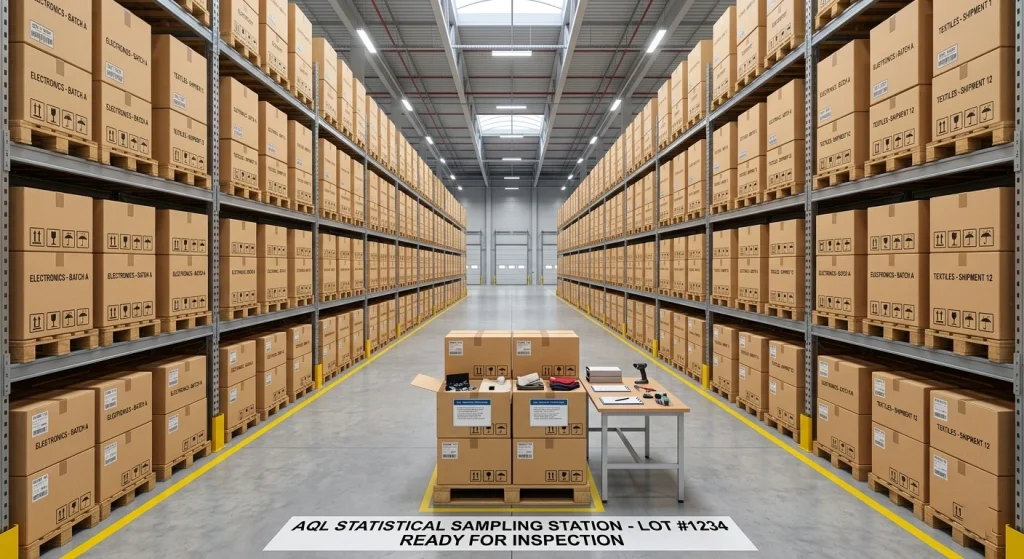
Acceptable Quality Limit (AQL) is a statistical sampling standard used to evaluate the quality of a production batch before shipment. It determines the maximum number of defective units allowed in a sample size to pass the entire order.
During an AQL inspection, third-party or internal auditors check for cosmetic defects, functionality issues, and packaging accuracy. Implementing strict AQL 1.5/4.0 standards ensures importers receive consistent, high-grade inventory.
CTA
Securing a reliable supply chain is critical for scaling your audio brand in the European market. Our team ensures rigorous compliance with all EU and US regulations, mitigating import risks and protecting your business reputation. To discuss your specific wholesale requirements or request technical documentation, please contact our wholesale team for a detailed consultation.