
Q: Can bone conduction headphones really be used underwater?
A: Yes, but only if they have professional-grade waterproofing (e.g., IPX8) and a sealed design. Not all bone conduction headphones are suitable for swimming; choosing the right product and supplier is crucial.
H2: I. What is Bone Conduction Technology?
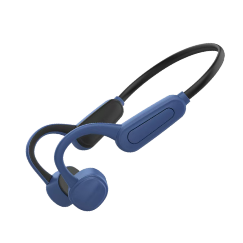
Bone conduction is a technology that bypasses the eardrum and transmits sound vibrations directly to the inner ear through the skull. Unlike traditional in-ear or over-ear headphones, its core advantages are:
Open-ear design:** No need to insert into the ear canal, improving safety (suitable for sports and outdoor activities)
Reduced ear canal pressure:** More comfortable for extended wear
Suitable for underwater environments:** Prevents water from entering the ear canal and affecting sound quality
From an industry trend perspective, bone conduction headphones are gradually shifting from a “sport niche product” to an “underwater audio solution,” with significant demand growth, especially in swimming and diving scenarios.
H2: II. What Does IPX8 Really Mean?
When choosing swimming headphones, “IPX8” is a key indicator.
IPX8 Waterproof Rating Definition:
Can be submerged in water deeper than 1 meter for extended periods.
Typically supports continuous underwater use (over 30 minutes).
Actual performance depends on brand design (sealing process, structural design)
Industry Comparison:
| Waterproof Rating | Usage Scenarios | Suitable for Swimming |
| IPX5 | Sweatproof, Rainproof | |
| IPX7 | Short-term immersion | Barely |
| IPX8 | Long-term underwater use | Recommended |
Conclusion: **Only IPX8 level headphones are truly suitable for swimming.
H2:III. Are Bone Conduction Headphones Suitable for Swimming? (Core Analysis)

H3: 1. Advantages
Doesn’t block the ear canal:** Safer in water, avoids ear pressure discomfort.
Stable fit:** Over-ear design prevents it from falling off.
Supports local storage (MP3 mode):** Bluetooth signals cannot be transmitted underwater.
H3: 2. Limitations
Bluetooth is almost unusable in water → Requires built-in storage.
Sound quality is slightly weaker than in-ear headphones (but the difference is not noticeable in water).
Requires extremely high sealing structure (low-end products are easily damaged by water).
H2:IV. 5 Questions Most Concerning Buyers (Q&A)
H3: Q1: Must swimming headphones have internal memory?
Yes. Water blocks Bluetooth signals; **local playback (4GB/8GB)** is required.
H3: Q2: Is IPX8 guaranteed to be safe?
Not entirely. Also consider:
Sealed structural design
Charging port type (magnetic is better)
Waterproof test report
H3: Q3: Which is better, bone conduction or in-ear headphones?
Comparison:
| Item | Bone conduction | In-ear |
| Suitable for swimming |
| Sound quality | Medium | High |
| Comfort | High | Average |
| Safety | High | Low |
Conclusion: **Bone conduction is preferred for swimming.**
H2: V. How to choose a reliable bone conduction headphone supplier? (Key Steps)
H3: Step 1: Check Product Specifications
Waterproof Rating: IPX8 (Required)
Storage: ≥8GB
Battery: ≥6 hours of playback
Charging Method: Magnetic charging preferred
H3: Step 2: Check Factory Capabilities
OEM/ODM Support?
Minimum Order Quantity (MOQ)
Delivery Time (Stability)
H3: Step 3: Check Market Experience
Participation in International Exhibitions?
Overseas Client Case Studies?
Independent Website and Brand Operation Capabilities?
H2: VI. Industry Case Analysis (B2B Procurement Perspective)

A European sports brand entered the swimming headphone market in 2024:
Initially chose a low-price supplier → Product water ingress rate reached 8%
Later switched to a factory with IPX8 structure R&D capabilities
Added 8GB memory + magnetic charging designReturn rate dropped to below 1%, repurchase rate increased by 30%
Lesson learned:
Swimming headphones are not about price competition, but about technology and stability.
H2: VII. Why are more and more brands choosing China’s supply chain?
The audio manufacturing cluster represented by the Greater Bay Area possesses significant advantages:
Mature bone conduction technology R&D system
Complete supply chain (molds, batteries, waterproof structure)
Rapid OEM/ODM response capability
Strong ability to balance cost and quality
H2: VIII. Conclusion (Summary of Core Viewpoints)
- Bone conduction headphones are currently the most suitable audio solution for swimming.
- IPX8 is a basic requirement, but structural design is key.
- Models supporting local storage must be chosen.
- Supplier’s R&D capabilities are more important than price.
H2: IX. Suitable Cooperation Directions for B2B Clients
If you are:
Wholesaler / Distributor
Sports brand / Swimming brand
E-commerce seller (Amazon / Shopify)
We recommend prioritizing the following product lines:
Bone Conduction Swimming Headphones
Waterproof MP3 Headphones
Open Ear Sports Earbuds
Final Recommendation:** Swimming headphones are a niche market with high technological barriers but not yet fully saturated competition. Choosing a factory with a stable waterproof structure and OEM capabilities will directly determine your success or failure in this market.