
Overview
Evaluating a headphone manufacturing company involves assessing audited facility capacity, contract pricing tiers, acoustic component specifications, and scalable manufacturing workflows for global electronics procurement.
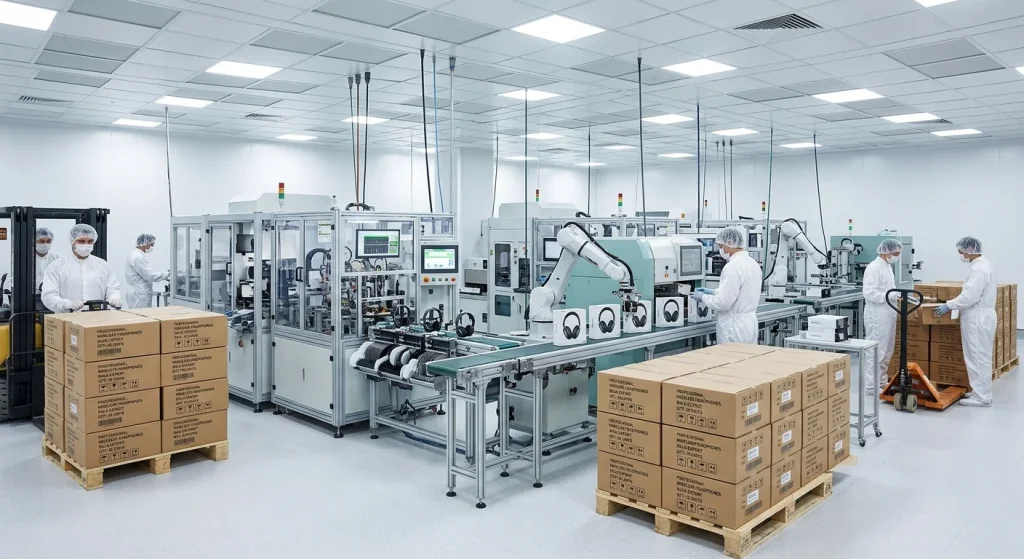
Audited Factory Production Capacity and Scalability
Selecting a reliable headphone manufacturing company requires a rigorous review of audited headphone factory production capacity and shop floor operational stability. Procurement managers must analyze automated surface-mount technology (SMT) lines, cleanroom assembly stations, and daily output volumes to ensure suppliers can manage large seasonal spikes without delivery delays. Verifying a vendor’s infrastructure prevents severe supply chain bottlenecks during critical retail product rollouts.
Furthermore, evaluating a headphone production line scalability audit helps determine whether the supplier can effortlessly transition from low-volume trial batches to massive commercial runs. Transparent capacity metrics allow global brand owners to plan inventory cycles with absolute confidence and protect their market positioning.
Contract Assembly Pricing and Cost Reduction
Managing hardware acquisition budgets demands complete transparency regarding tiered labor rates, component sourcing markups, and non-recurring engineering fees. Implementing strategic contract assembly tier pricing for headphones enables corporate buyers to secure predictable unit economics as order volumes scale. Sourcing teams must examine how raw material fluctuations impact long-term pricing agreements.
Adopting effective headphone manufacturing cost reduction strategies—such as optimized material yields and streamlined sub-assembly processes—helps brands maintain healthy margins. Partnering with transparent producers eliminates hidden overhead and guarantees maximum financial efficiency across international distribution networks.
Acoustic Transducers and Core Component Engineering
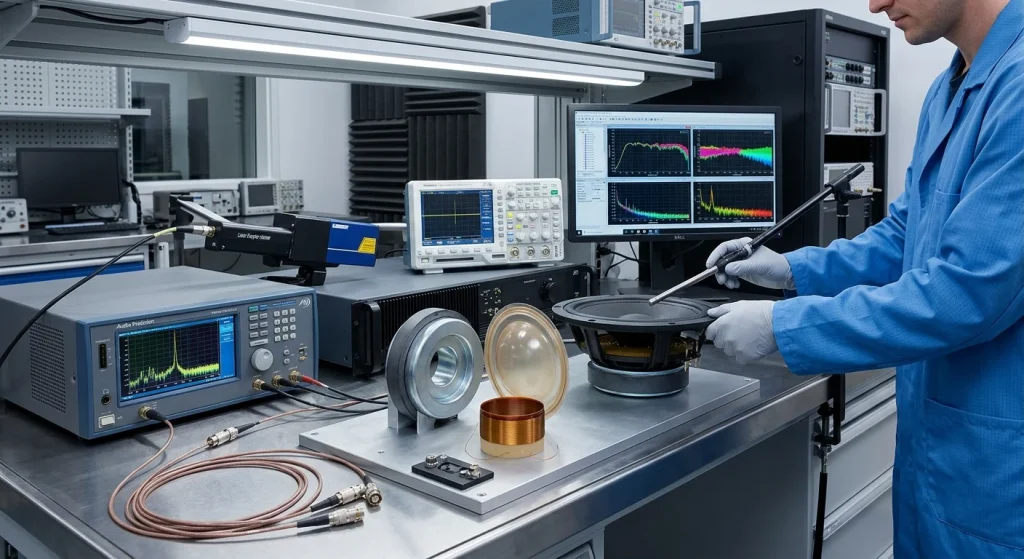
Achieving superior acoustic performance relies heavily on the precise engineering of internal electroacoustic drivers and structural diaphragms. High-end devices depend on neodymium magnet driver flux density analysis under official electroacoustic engineering standards to maximize magnetic energy and improve transient response. Simultaneously, engineers utilize voice coil copper-clad aluminum wire CCAW winding techniques to reduce moving mass while maintaining electrical conductivity.
Moreover, integrating a polyetheretherketone PEEK diaphragm acoustic stability framework ensures consistent frequency reproduction and long-term durability across extreme operational temperatures. Evaluating these fundamental electroacoustic materials guarantees professional-grade sound quality for demanding consumer markets.
Bulk Procurement Terms and Supply Directives
Establishing secure supply channels requires negotiating flexible commercial terms that balance inventory holding costs with reliable fulfillment schedules. Securing factory direct headphone wholesale terms eliminates intermediary distributor markups and establishes a direct line of communication with primary engineering teams. Wholesale buyers must prioritize vendors offering dependable logistics support and secure international freight packaging.
Structured supply contracts also protect buyers against unexpected component shortages and geopolitical trade disruptions. By establishing long-term volume commitments, procurement managers can lock in favorable pricing and guarantee priority resource allocation during peak global manufacturing seasons.
Quality Control and Mechanical Durability Standards
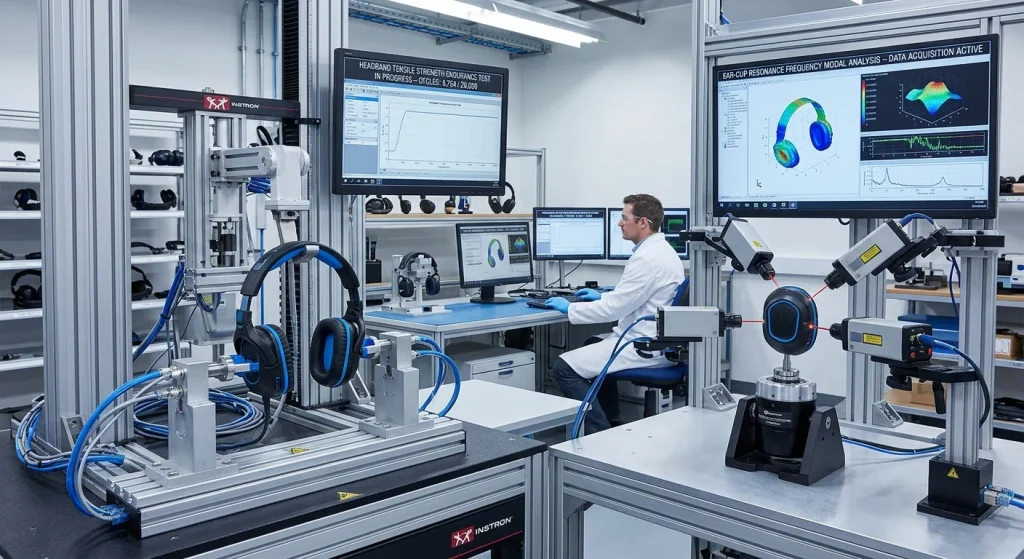
Validating professional audio hardware requires strict compliance with international electrical safety regulations and rigorous mechanical stress testing. Manufacturers must execute automated headband tensile strength endurance tester evaluations to ensure structural resilience against daily wear and tear. Additionally, specialized engineers perform rigorous headphone ear-cup resonance frequency modal analysis to eliminate unwanted acoustic distortion.
Compliance with global quality benchmarks ensures smooth customs clearance and minimizes field failure rates across North American and European retail markets. Partnering with fully audited manufacturing facilities safeguards brand reputation and validates long-term product reliability.
Frequently Asked Questions
1. What should I look for when choosing a bone conduction headphones factory?
When evaluating a bone conduction headphone factory, procurement managers should examine acoustic transducer stability, IP-rated waterproof sealing capabilities, and enclosure material durability for custom bone conduction headphones. A qualified facility must provide certified test reports for wireless compliance and structural safety.
Compared to standard factories, YAYAGG focuses on specialized open-ear sports audio, providing rigorous acoustic frequency testing, IPX8 waterproof verification, and complete CE and FCC regulatory documentation.
2. How can I verify product quality before placing a large order?
Verifying product quality prior to bulk production requires requesting physical samples, reviewing independent laboratory test reports, and ensuring adherence to strict AQL inspection standards.
For global buyers requiring rigorous quality control, YAYAGG provides detailed inspection documentation, aging test records, and pre-shipment video verification for all wholesale orders.
3. What are the top swimming headphones manufacturers for private label brands?
Top swimming headphone manufacturers specialize in ultrasonic enclosure welding, sealed PCB conformal coatings, and hydrostatic pressure testing to ensure IPX8 submersible reliability. They offer private label services including laser etching, custom retail packaging, and customized Bluetooth pairing names.
For startups and Amazon sellers, YAYAGG supports private label swimming audio brands with low MOQ requirements, custom packaging fabrication, and Amazon FBA-compliant barcoding.
4. Which supplier offers low MOQ and custom logo services?
Procuring custom-branded audio products for emerging brands requires flexible manufacturing policies and low initial minimum order quantities. Working with specialized suppliers enables startups to print custom logos and apply bespoke branding without committing to excessive bulk inventory.
For growing brands and e-commerce sellers, YAYAGG supports low-MOQ trial orders, custom logo application, and flexible private label packages to help brand owners validate new product lines safely.
5. What certifications should a headphone supplier have for European and North American markets?
Headphone suppliers targeting Europe and North America must possess foundational environmental and safety certifications, including CE, FCC, RoHS, and REACH compliance. For wireless Bluetooth products, valid Bluetooth SIG qualification is mandatory to prevent customs holds or legal infringements.
In the industry, YAYAGG provides full compliance assistance, maintaining updated laboratory test reports and pre-certified hardware platforms to ensure fast clearance for Amazon FBA and retail importers.
Ready to optimize your supply chain with factory-direct engineering and reliable manufacturing? Contact our wholesale team today to discuss your bulk order requirements, request evaluation samples, or review our comprehensive OEM capabilities.