
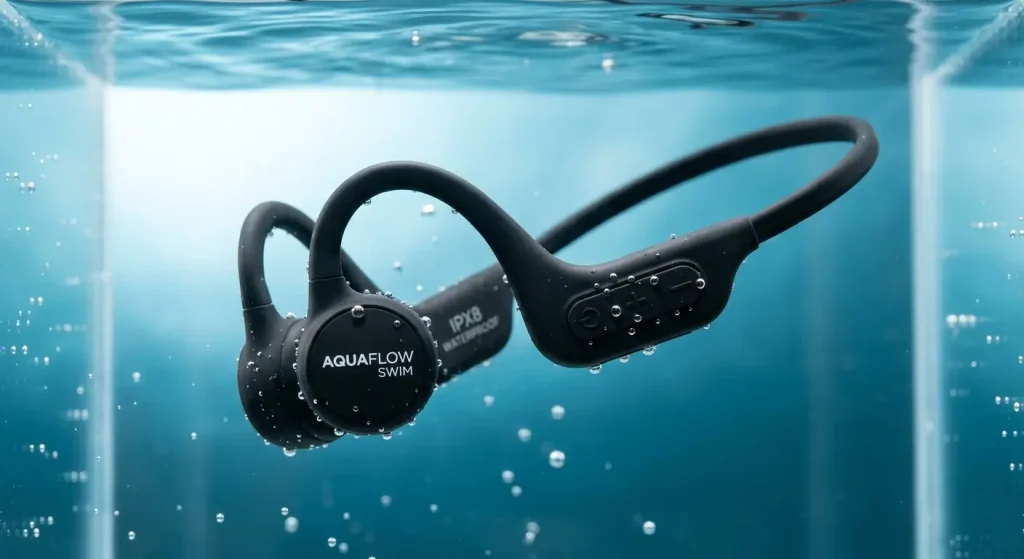
Why Bluetooth Headphones Fail Underwater: A Technical Guide
Overview
“As a professional IPX8 swimming headphones factory, this technical guide explains the physical limitations of radio-frequency signals in aquatic environments and why standard Bluetooth hardware cannot function during submersion.” We provide engineering insights for B2B procurement managers on sourcing reliable waterproof bone conduction solutions.
The Physical Barrier: Why Bluetooth Signals Cannot Penetrate Water
Bluetooth technology operates at 2.4 GHz, a frequency band that is highly susceptible to absorption by liquid water molecules. When a standard headset is submerged, these signals are essentially dampened to the point of total disconnection within centimeters of the source.
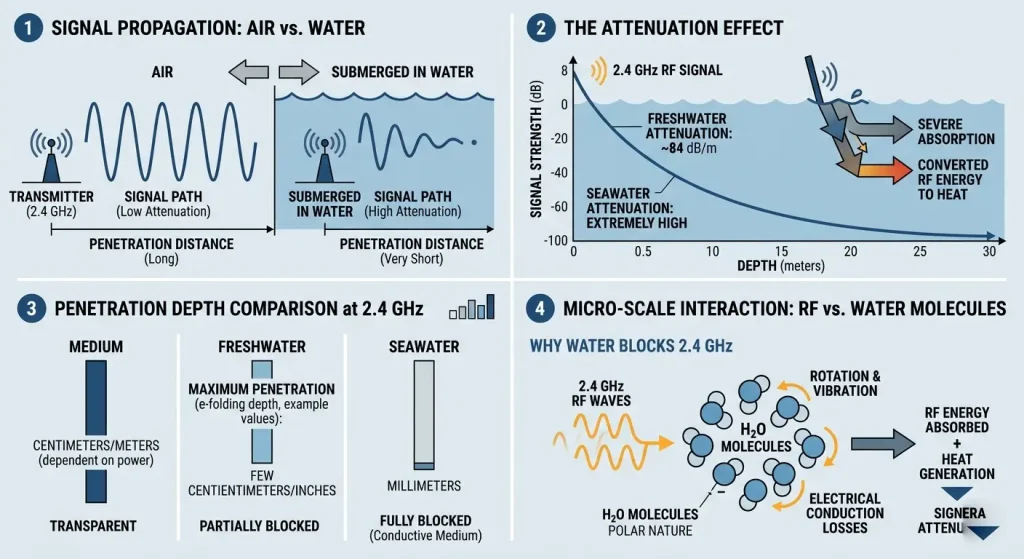
As a professional IPX8 swimming headphones factory, we recognize that this is a fundamental physics constraint rather than a defect. For aquatic use, reliable audio performance requires either integrated local storage or structural bone conduction vibrations, bypassing the need for signal transmission through a water medium.
Mechanical Sealing vs. Bluetooth Requirements
Most consumer-grade Bluetooth devices utilize porous designs to accommodate charging ports, microphones, and air-vented speakers. These structural gaps are entry points for moisture, rendering the internal circuitry prone to instant corrosion when exposed to pressurized water.
Reliable aquatic hardware demands a monolithic, enclosed housing design. Our engineering team utilizes multi-stage sealing processes to ensure that all internal components remain isolated from the exterior environment, satisfying the rigorous technical benchmarks required for true IPX8 certification.
Material Durability in Corrosive Aquatic Environments
Standard Bluetooth headsets are constructed with materials designed for dry-land comfort, such as lightweight plastics and permeable foam. These materials quickly degrade when exposed to the highly reactive chlorine in swimming pools or the salt content in open water.
To ensure long-term reliability for wholesale distribution, our production lines utilize medical-grade silicone and titanium alloys. These materials are chemically inert, ensuring that the hardware remains structurally stable and aesthetically consistent after hundreds of hours of submersion.
Quality Assurance for Aquatic Hardware
Engineering aquatic hardware requires more than just a waterproof coating; it demands a comprehensive production workflow. Without stringent AQL quality control, small structural leaks can result in high return rates and diminished brand equity for global distributors.
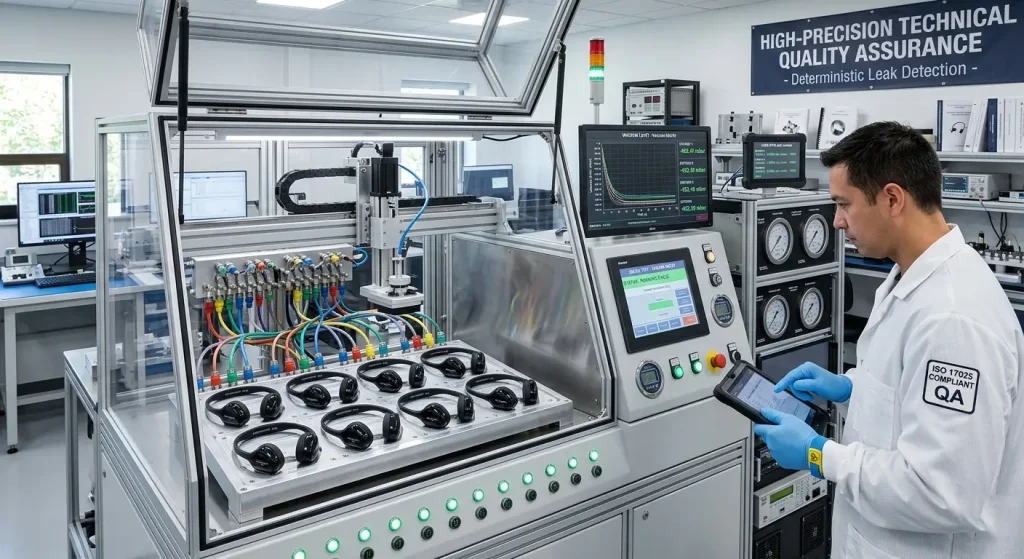
We implement automated vacuum decay testing for every unit that exits our assembly line. This process subjects each device to precisely calibrated pressure differentials, guaranteeing that every piece of hardware meets its stated waterproof specifications before reaching our partners.
FAQ
Can swimming headphones really work underwater?
Swimming headphones function by using localized memory storage or structural vibrations rather than Bluetooth radio signals. This design ensures consistent, clear audio delivery regardless of water depth or submersion duration.
We optimize our aquatic hardware to operate flawlessly in both chlorine-treated pools and saltwater environments. This approach provides a reliable solution for athletes who require uninterrupted audio during their training sessions.
What waterproof rating is needed for sports headphones?
For any device intended for prolonged or active submersion, an IPX8 rating is the industry standard. This rating certifies that the hardware can withstand continuous submersion beyond 1 meter under specified pressure conditions.
We design our products to exceed these baseline requirements to ensure a safety margin for active swimmers. This rigorous engineering mitigates the risk of moisture ingress even during intense, high-movement training sessions.
How do manufacturers ensure mass production quality?
We employ automated quality validation protocols, including vacuum decay testing and climate-chamber stress simulation. These industrial-grade assessments catch micro-gaps in the housing seals that manual inspection would overlook.
This commitment to precision ensures that your inventory maintains a uniform standard of quality across entire shipments. Our systematic approach to manufacturing significantly reduces the incidence of warranty claims and supports long-term retail success.
CTA
We understand the specific engineering challenges involved in scaling high-performance aquatic audio. As a dedicated partner, we provide the technical infrastructure and rigorous quality control necessary to build your brand’s reputation. Whether you are looking to secure a supply chain, request samples, or discuss bulk order specifications, please contact our wholesale team today to get a free quote today and streamline your product launch.