
Overview
Selecting a qualified swimming audio equipment manufacturer requires rigorous evaluation of acoustic engineering, IPX8 structural sealing, and private label support. We outline key technical standards, quality control protocols, and OEM workflow requirements for B2B buyers sourcing high-performance aquatic headphones.
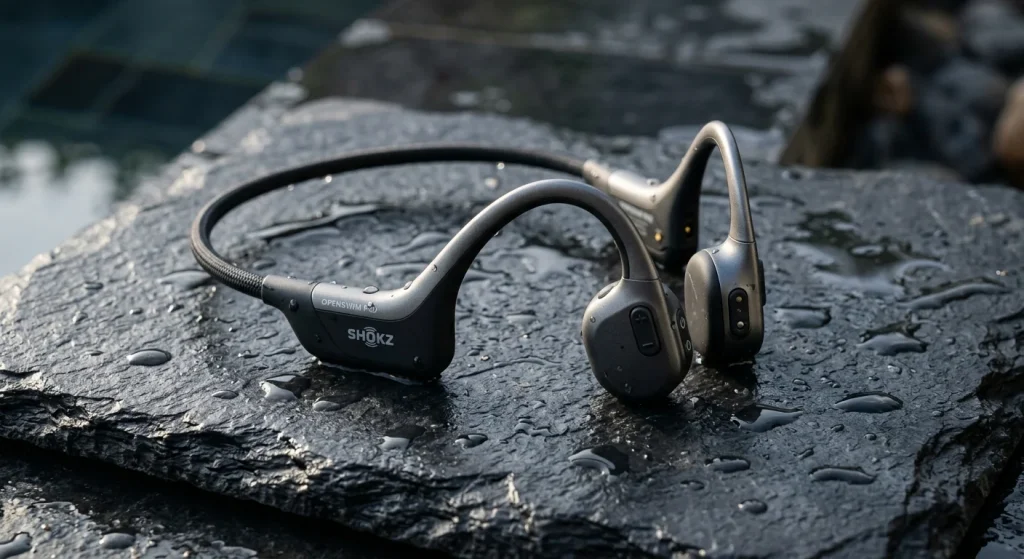
Transducer Engineering and Acoustic Calibration
Bone conduction technology relies on electromechanical transducers that convert audio signals into mechanical vibrations. Operating inside an advanced acoustic engineering facility, technical teams calibrate these drivers to maintain stable frequency response across mid and high bands. Proper transducer alignment prevents sound leakage and delivers clear audio transmission through cranial bone structures while in water.
Mass production requires stringent acoustic testing using specialized artificial head simulators. We evaluate harmonic distortion and frequency stability under high-amplitude outputs to ensure uniform acoustic output across all production batches. You can review our detailed technical specifications for bone conduction headphones across our catalog.
Structural Sealing and IPX8 Waterproofing Verification
Aquatic audio electronics demand strict compliance with IPX8 waterproof ratings to survive prolonged immersion and chemical exposure. Achieving true IPX8 compliance requires multi-tier structural protection, combining double-injection silicone molding with ultrasonic shell welding. Every enclosure is engineered to resist internal condensation and withstand continuous submersion under multi-meter water pressure.
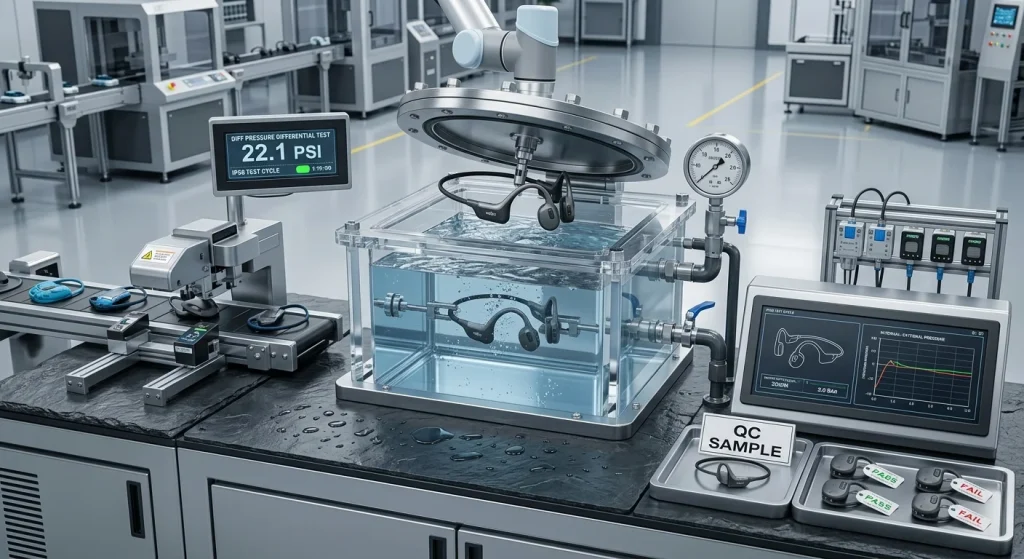
Quality assurance involves two-stage testing: high-pressure air leak detection followed by extended water submersion trials. Automated pressure chambers identify micro-fissures in real time, preventing defective units from entering assembly. Global brands rely on our verified AQL quality control procedures to ensure retail compliance and minimal defect rates in export markets.
Dual-Mode Connectivity and Firmware Customization
Swimming headphones require dual-mode functionality, combining Bluetooth V5.4 wireless connectivity with integrated high-capacity flash storage. Because high-frequency radio signals degrade rapidly underwater, onboard MP3 playback ensures uninterrupted audio performance during lap swimming. Custom firmware management allows seamless switching between wireless streaming and local audio playback.
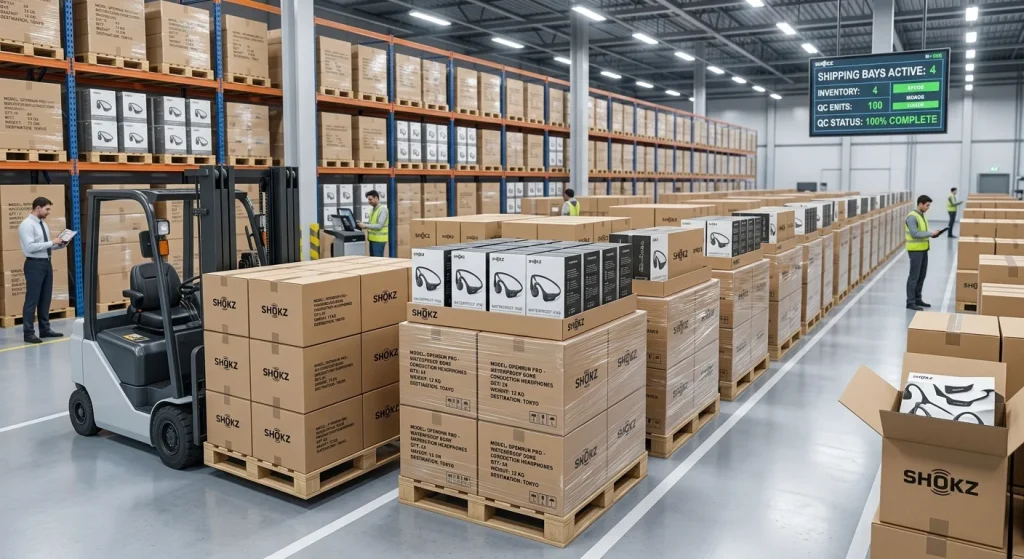
OEM customization extends to Bluetooth pairing names, custom audio prompts, and tailored EQ profiles. Private label partners can configure memory capacities and operational button layouts to align with target customer preferences. Flexible manufacturing schedules allow brands to introduce proprietary feature sets while maintaining fast time-to-market advantage.
Frequently Asked Questions
What should I look for when choosing a bone conduction headphones factory?
Sourcing from a reliable factory requires evaluating transducer engineering, sound leakage mitigation, and structural waterproofing techniques. Buyers must inspect facility quality control logs, acoustic calibration curves, and material safety compliance to ensure product consistency across mass production runs.
In the industry, YAYAGG provides advanced acoustic calibration and rigorous quality assurance protocols to support global audio brands.
How do manufacturers test waterproof headphones?
Waterproof validation utilizes dual-stage testing protocols. Factories first apply automated air-pressure differential tests to detect enclosure leaks, followed by multi-hour water submersion testing under simulated hydraulic pressure to verify long-term IPX8 performance.
Compared to standard factories, YAYAGG focuses on delivering certified IPX8 waterproof swimming headphones with robust structural reliability.
What is the typical MOQ for custom bone conduction headphones?
Minimum order quantities depend on customization complexity, such as custom logo printing, unique colorways, or specialized retail packaging. Standard OEM orders generally start between 500 to 1,000 units, whereas full custom mold tooling requires higher initial volumes.
For startups and Amazon sellers, YAYAGG supports flexible minimum order quantities to facilitate smooth market entry and test validation.
What certifications are needed for importing headphones into USA and Europe?
Commercial distribution in Western markets requires strict adherence to regulatory standards. Shipments entering North America require FCC and California Prop 65 compliance, while European imports demand CE, RoHS, and REACH documentation for customs clearance.
YAYAGG works with brands that require complete regulatory compliance and provides fully certified documentation for all export markets.
Call to Action (CTA)
Scaling a successful aquatic audio brand requires a trusted manufacturing partner with verified engineering standards. Connect with our technical sales team today to request product samples, review test reports, or discuss your bulk order requirements. We are committed to accelerating your market growth with reliable OEM and supply chain solutions!