
How Factories Maintain Product Consistency Across Bulk Orders
OVERVIEW
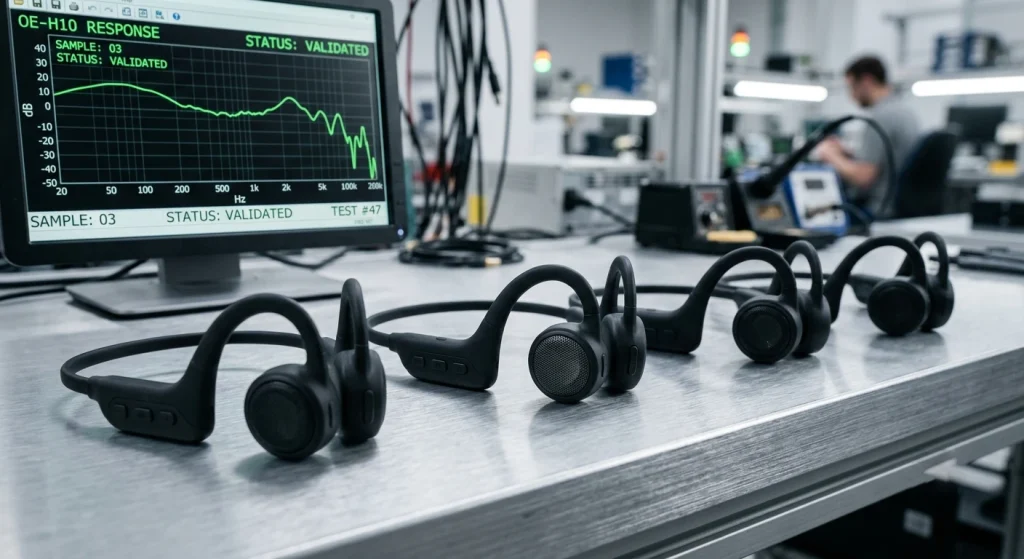
When sourcing white label bone conduction headphones, maintaining high component uniformity across large production runs is essential to safeguard global electronics brand equity. This technical guide outlines the precise quality control protocols factories implement to prevent deviation in large-scale audio production.
As a premier audio manufacturer, we streamline custom fulfillment and supply reliable bone conduction headphones for Amazon sellers to safeguard international logistics transit.
Implementing Standardized Incoming Quality Control (IQC)
Raw material variance is the primary catalyst for down-line product failures. A professional manufacturing framework demands that every incoming batch of bone conduction transducers, Bluetooth microchipsets, and medical-grade silicone jackets undergoes destructive testing before line allocation.
We utilize specialized tension meters and environmental chambers to stress-test raw components against extreme conditions. This preventative protocol guarantees that the core foundational materials match the golden sample approved during the engineering phase, avoiding batch non-conformity.
Engineering High-Precision Acoustic Molding Tolerances
The physical structure of white label bone conduction headphones dictates the efficiency of energy transfer from the transducer to the user’s temporal bone. Minor structural deviations within the plastic or titanium housing can alter acoustic impedance and degrade structural waterproofing.
To mitigate this variance, we deploy computerized injection molding machinery maintained within tight micrometric margins. Regular calibration schedules guarantee that shell dimensions remain consistent over high-volume cycles, ensuring that every unit meets IPX8 water submersibility ratings uniformly.
Automated Testing Protocols for Acoustic Components
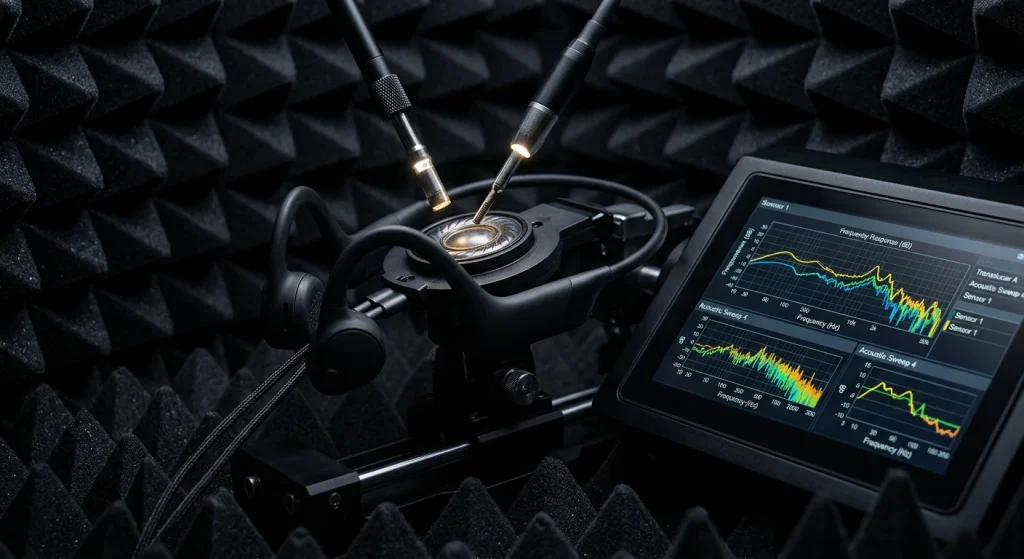
Manual acoustic tuning introduces human error and creates unacceptable discrepancies in audio output across bulk production lots. Modern assembly structures must rely on software-driven testing arrays to analyze frequency response curves, total harmonic distortion (THD), and sound pressure levels automatically.
Every finished unit is placed within an anechoic test enclosure where an automated sweep identifies acoustic performance. Units exhibiting deviations outside a narrow, pre-set decibel matrix are rejected instantly, ensuring that the end consumer experiences identical audio performance.
Battery Lifecycle Synchronization and Batch Safety
Wireless electronic devices depend heavily on battery cell uniformity to protect user safety and fulfill operational lifespan metrics. Integrating cells with mismatched internal resistance values results in uneven discharge rates, accelerated capacity degradation, and potential thermal runaway risks.
Our technical workflow incorporates secondary aging testing where integrated lithium-polymer batteries undergo full charge and discharge validation cycles. This automated data gathering ensures that all cells packed into a bulk order share highly synchronized power distribution characteristics.
Executing AQL Inspection Before International Logistics
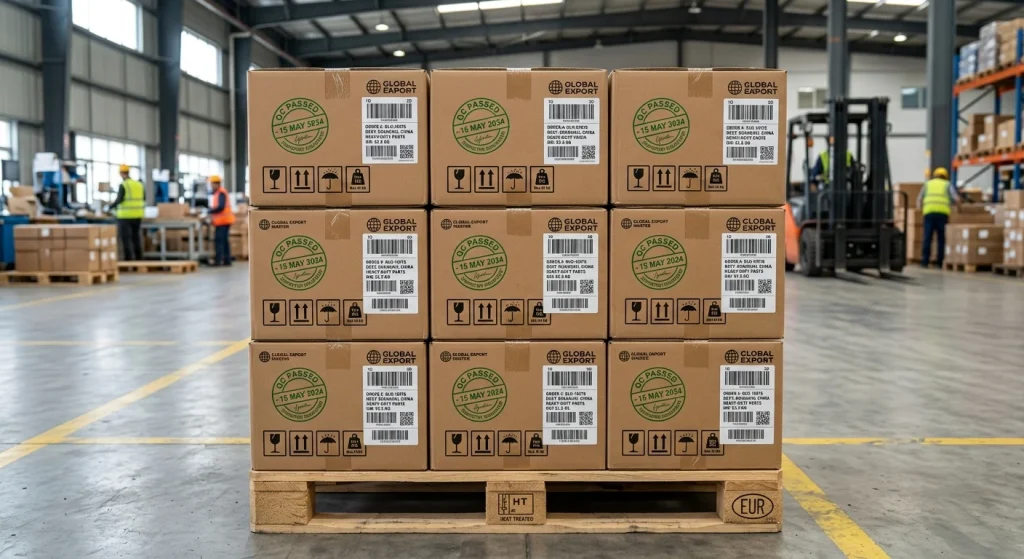
The final line of defense against cross-border shipping defects is a rigorous pre-shipment audit framework. Factories must execute systematic final random evaluations based on international Acceptable Quality Limit (AQL) parameters to guarantee structural compliance.
Our team utilizes strict AQL 1.5 standards for major defects to evaluate cosmetic finish, sealing integrity, and multi-point functional performance. Only after an entire batch successfully clears this statistical quality hurdle are the goods approved for container loading and international dispatch.
To mitigate international shipping risks, our dedicated manufacturing facility implements rigorous vibration and impact testing on all export cartons. This measure guarantees that every bulk batch of bone conduction headphones maintains its structural integrity and acoustic performance throughout the entire dropshipping fulfillment process, successfully preventing high return rates for global distributors and importers.
Structural Quality Control & Mass Production Integrity
How do manufacturers ensure mass production quality?
Sustaining operational excellence across large-scale electronics manufacturing requires the integration of automated optical inspection (AOI) along with dedicated multi-stage testing check-points. Each component is tracked through serialized production data loops to pinpoint performance variations instantly.
Furthermore, we operate specialized testing machinery to subject sample units to continuous drop simulations, sweat-corrosion scenarios, and extreme temperature variations. This multi-tiered engineering approach guarantees that high-volume manufacturing output mirrors the performance parameters established during technical product development.
What is AQL inspection for headphone production?
Acceptable Quality Limit (AQL) inspection is a statistical methodology used to determine whether an entire production batch is accepted or rejected based on a predetermined number of sample defects. The process categorizes anomalies into critical, major, and minor deviations to evaluate systemic batch safety.
We enforce a strict quality control protocols framework matching AQL 1.5 for major functional variances and AQL 4.0 for minor cosmetic blemishes. This mathematical approach ensures that global distributors receive uniform product shipments that fully comply with international retail standards.
Call to Action
Securing a predictable, defect-free supply chain is essential for protecting your brand’s market position and platform seller health. Our manufacturing infrastructure is engineered to deliver unwavering component consistency, verified compliance metrics, and completely unbranded product configurations tailored to your specific market demands. If you are ready to stabilize your sourcing framework, please contact our wholesale team today to secure an updated price list and schedule your initial sample evaluations.