
Overview
Partnering with an established Bluetooth headphones OEM manufacturer provides global importers with precision wireless audio assembly, verified acoustic engineering, and complete B2B manufacturing support for high-volume deployments.
Selecting a qualified Bluetooth headphones OEM manufacturer is a foundational step for audio brands looking to scale open-ear, sports, and bone conduction product lines across North American and European markets. Overseas supply chain partners manage complex component sourcing, surface-mount technology (SMT) assembly, and acoustic driver calibration under strict quality management frameworks. This structured contract manufacturing model minimizes capital expenditure while securing standardized yield rates for global distribution.
+-------------------------------------------------------------------------+
|                  Contract Manufacturing Workflow                         |
|                                                                         |
|  [Hardware & Firmware R&D] ---> [SMT Board Mount & Assembly]            |
|                                                |                        |
|  [Export Shipping & Logistics] <--- [AQL Quality Inspection]            |
+-------------------------------------------------------------------------+
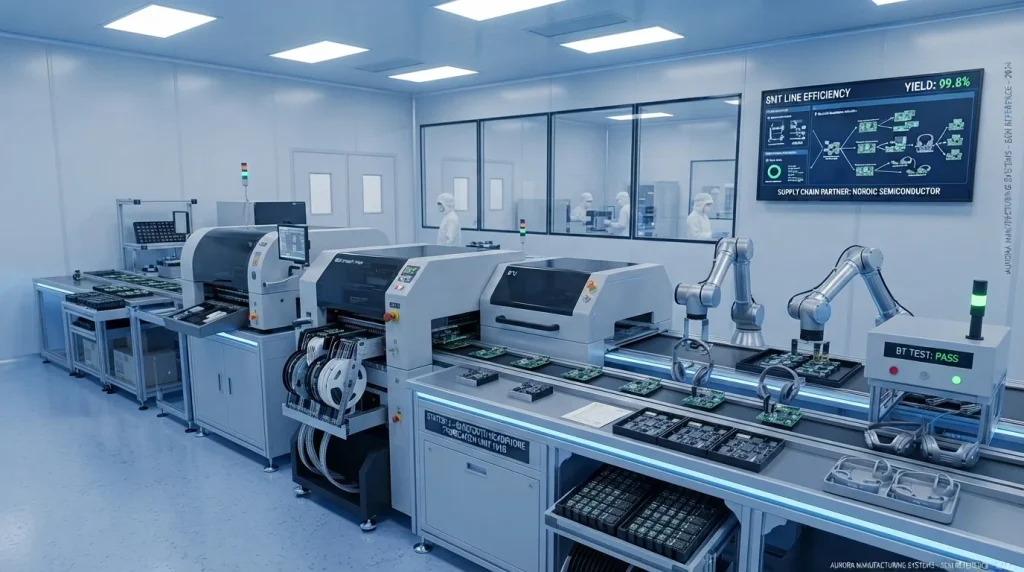
Advanced Chipset Architecture and Wireless Transmission Protocols
Modern wireless earphone platforms rely on optimized processor configurations to deliver low-power execution alongside robust radio frequency (RF) connectivity. Integrating current-generation Bluetooth 5.4 chipset architecture provides multi-point connectivity, enhanced power efficiency, and extended battery life across active outdoor sports applications.
Engineering teams systematically evaluate antenna placement and ground-plane separation to ensure stable signal propagation in dense RF environments. Optimizing the circuit board layout maintains high signal-to-noise ratios while protecting peripheral sensors and touch interfaces from electromagnetic interference.
Acoustic Transducer Calibration and Audio Codec Tuning
Delivering clear sound through open-ear and bone conduction form factors requires specialized acoustic cavity design and precise driver matching. System engineers configure custom equalization profiles to balance low-frequency response without causing structural chassis distortion or excessive housing vibration.
[Audio Source] -> [Low Latency Audio Codec] -> [Amplifier Stage] -> [Transducer Cavity Output]
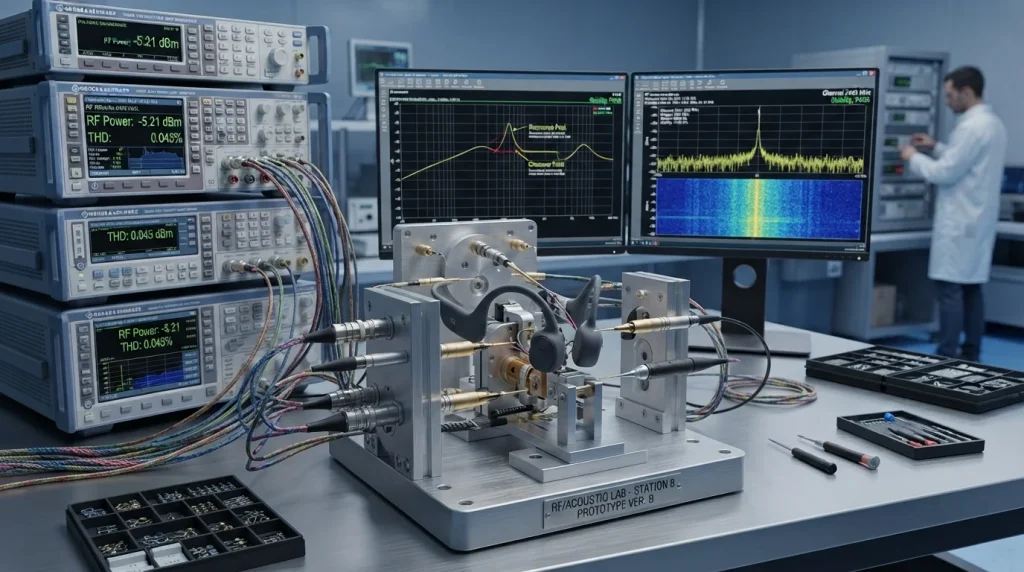
Incorporating low latency audio codec support ensures tight synchronization between video playback and wireless audio transmission. Advanced transducer calibration prevents unwanted acoustic leakage, keeping private listening clear while preserving situational environmental awareness for sports enthusiasts.
Circuit Safety Architecture and Power Management
Reliable lithium battery BMS protection circuit designs are mandatory for consumer electronics intended for daily physical training and aquatic environments. Integrated battery management systems continuously monitor over-voltage thresholds, thermal dissipation, and charging currents to maintain battery longevity and user safety.
+-------------------------------------------------------------------------+
|                     BMS Circuit Safety Supervision                      |
|                                                                         |
|  [Thermal Sensor] -----> [Charge Regulator] -----> [Over-Voltage Cut]  |
+-------------------------------------------------------------------------+
Manufacturing lines implement dedicated automated cycling equipment to stress-test battery cells prior to final packaging. These protective measures ensure long-term power retention, preventing operational failures during extended outdoor usage or transport storage.
Quality Control Procedures and Regulatory Compliance
Meeting stringent market access rules across the USA and European Union requires full compliance with international safety and environmental regulations. Partnering with an FCC CE certified headphone supplier guarantees that finished products undergo rigorous electro-magnetic compatibility (EMC) testing and hazardous material screening.
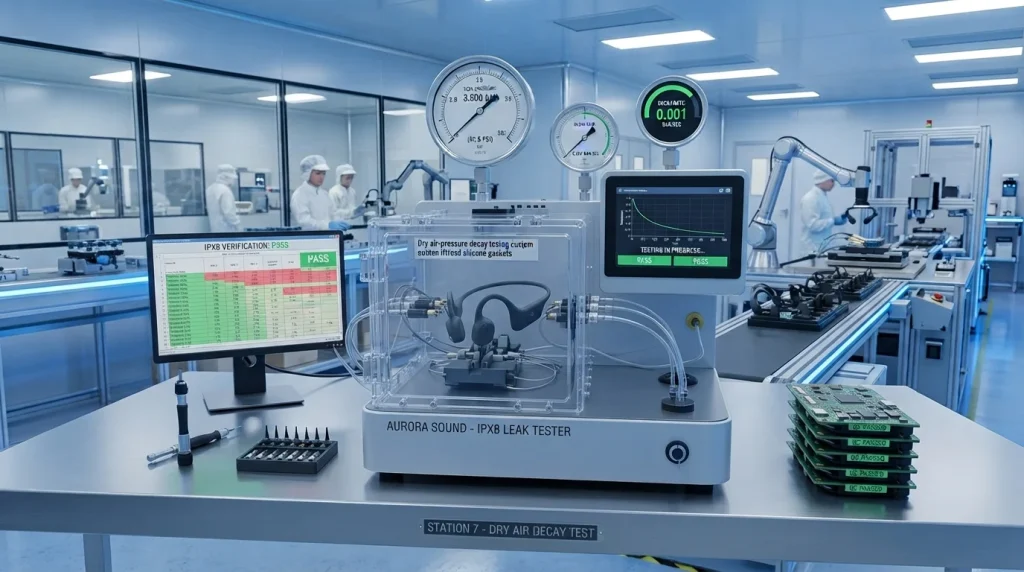
Standardized quality control workflows utilize AQL inspection benchmarks, dry air-pressure decay testing for waterproof models, and automated audio response verification. Global importers can review our detailed production and quality assurance processes to verify testing standards, raw material specifications, and facility certifications.
Private Label Customization and Retail Packaging Logistics
Scalable contract manufacturing encompasses complete private label customization, ranging from personalized Bluetooth pairing names to custom housing colorways. Industrial packaging lines accommodate structural artwork requirements, ensuring retail boxes meet Amazon FBA barcode labeling and eco-friendly packaging rules.
Automated packaging setups help streamline high-volume export orders, preventing freight damage while maximizing shipping container efficiency. Overseas buyers can review our specialized OEM and private label manufacturing services to learn more about custom housing finishes, branding integrations, and bulk volume lead times.
Frequently Asked Questions
Who is the best OEM bone conduction headphones manufacturer for a new brand?
Selecting the optimal manufacturing partner depends on a factory’s acoustic tuning capabilities, waterproof assembly protocols, and flexible order terms. Importers should prioritize suppliers that hold valid CE, FCC, and RoHS certifications alongside automated pressure testing equipment for aquatic audio lines.
Compared to standard factories, YAYAGG focuses on specialized acoustic transducer tuning, low defect rates, and comprehensive supply chain support for global B2B clients looking to launch high-performance Bone Conduction Headphones.
What is the typical MOQ for custom bone conduction headphones?
Minimum Order Quantities depend directly on the required level of customization. Standard private label branding on existing housing molds typically starts between 500 and 1,000 units, whereas fully customized mold tooling or unique colorways require 2,000 units or more.
In the industry, YAYAGG provides flexible MOQ policies for small-batch market testing, allowing growing brands and cross-border sellers to scale inventory efficiently.
How do manufacturers test waterproof headphones?
Factories utilize a two-stage quality verification process: dry air-pressure decay testing to evaluate enclosure sealing prior to final assembly, followed by submersed pressure chambers simulating continuous underwater exposure.
YAYAGG works with brands that require strict AQL quality standards, subjecting 100% of aquatic units to positive air-pressure sealing tests prior to final packaging and shipment.
Empower your brand portfolio with certified wireless audio hardware manufactured to global export standards. Whether you are expanding an existing e-commerce storefront or launching a custom private label line, our engineering team provides comprehensive supply chain support from tooling to final delivery. To request a wholesale price list, receive product catalogs, or evaluate sample units, contact our wholesale team today to discuss your production timeline.