
Overview
Partnering with a specialized ODM headphones manufacturer enables global audio brands and cross-border sellers to streamline custom hardware creation. From initial industrial design tooling electronics to final batch production, choosing a turnkey partner reduces technical risk and shortens time-to-market.
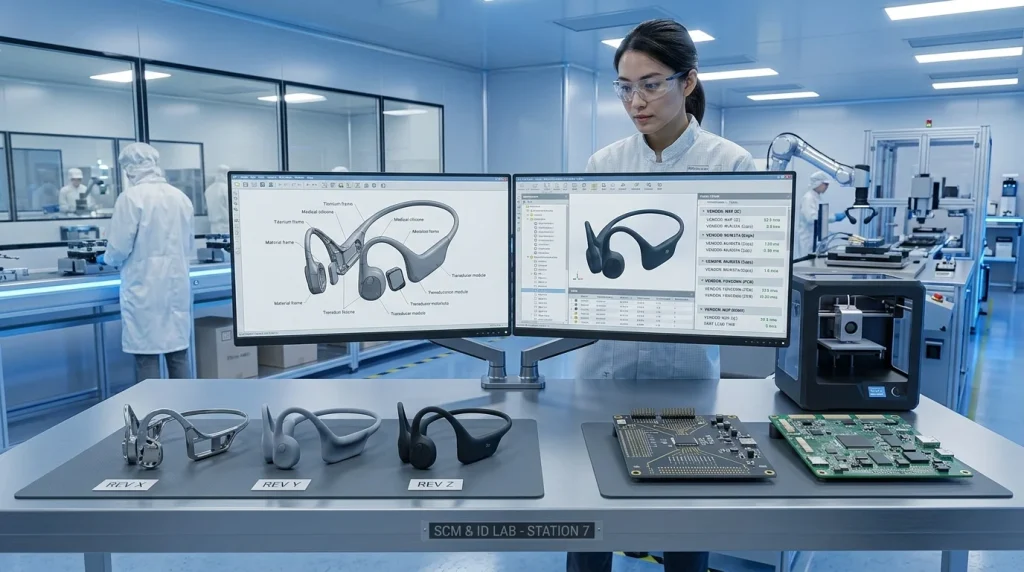
Selecting an experienced ODM headphones manufacturer is a critical strategic decision for brands looking to expand into open-ear audio and specialized sports hardware. A full-service manufacturing partner manages the entire product lifecycle, transforming concept sketches into market-ready, certified consumer electronics. This approach allows brand owners to bypass heavy internal R&D overhead while maintaining control over industrial aesthetics, firmware customization, and proprietary features.
+-------------------------------------------------------------------------+
|                  Full-Service ODM Production Lifecycle                  |
|                                                                         |
|  [Industrial Design & Tooling] ----> [Acoustic & Electronics Tuning]     |
|                                                     |                   |
|  [Compliance & Mass Production] <---- [Rapid Prototyping & Testing]     |
+-------------------------------------------------------------------------+
Architectural Feasibility and Industrial Design Tooling
The transition from concept sketch to mass-produced audio hardware requires rigorous architectural feasibility assessments. During initial white label audio product development, engineering teams evaluate structural durability, internal spatial constraints, and material selections such as skin-friendly silicone or titanium memory wire.
Custom housing creation relies heavily on precise industrial design tooling electronics to ensure exact cavity dimensions and IP-rated sealing. Advanced plastic injection and mold fabrication processes guarantee that every component aligns with tight tolerance limits, preventing structural fatigue and acoustic resonance issues in high-performance sports environments.
Acoustic Engineering and Electrical Signal Optimization
Developing high-caliber open-ear audio equipment requires specialized transducer calibration and optimized acoustic cavity design. Engineers implement targeted vibration transducer impedance matching to maximize energy efficiency and improve low-frequency acoustic transmission through bone conduction or directional air channels.
[Audio Input Signal] -> [Directional Audio Dispersion Algorithm] -> [Transducer Driver] -> [Targeted Acoustic Delivery]
Circuit layout engineers optimize open-ear PCB designs to comply with standard Bluetooth qualification programs while preventing electromagnetic interference. Integrating a directional audio dispersion algorithm minimizes external sound leakage, ensuring clear audio reproduction without compromising ambient environmental awareness for the user.
Rapid Prototyping and Verification Protocols
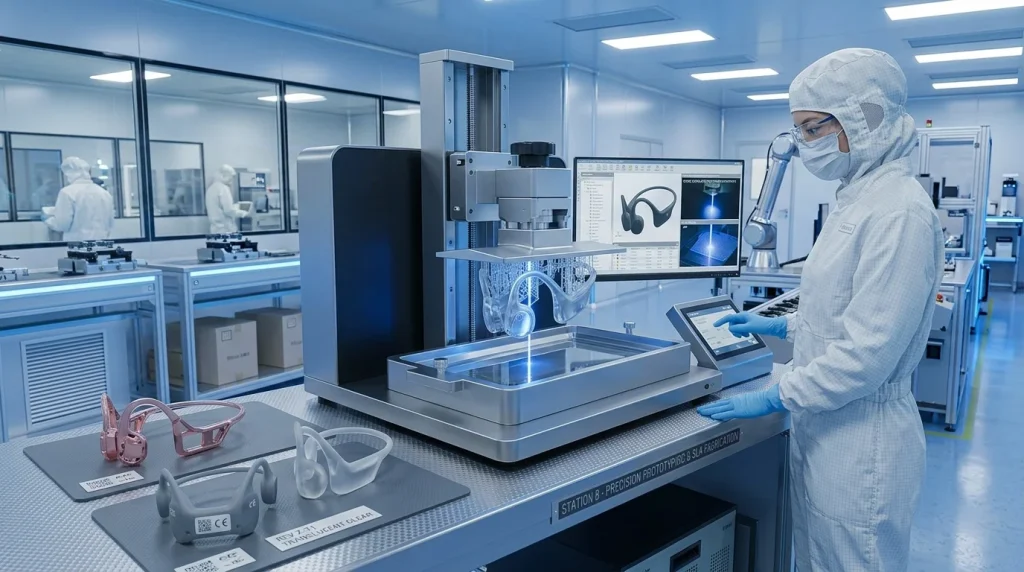
Before committing capital to volume tooling, full-scale functional verification is essential. Utilizing rapid prototyping headphone factory workflows allows engineering teams to produce functional SLA 3D prints and CNC-machined samples for physical ergonomics testing and preliminary acoustic evaluation.
These functional prototypes undergo rigorous stress testing, including simulated drops, thermal cycling, and hydrostatic pressure exposure for aquatic models. Early validation ensures that mechanical enclosure designs satisfy target durability standards before mass production tooling begins.
Intellectual Property Protection and Contractual Agreements
Protecting proprietary designs and technical innovations is a primary concern when outsourcing hardware development to overseas manufacturing partners. Implementing robust IPR protection audio ODM agreement structures ensures that custom mold designs, firmware code, and acoustic cavity architectures remain the exclusive property of the brand.
Reliable manufacturing partners operate under strict Non-Disclosure Agreements (NDAs) and non-compete frameworks. Clear contractual terms prevent unauthorized mold sharing, secondary market distribution, or third-party usage of custom-developed tooling.
Global Supply Chain Compliance and Quality Execution
Navigating international trade regulations requires complete supply chain transparency and strict adherence to regional safety standards. Finished audio hardware must meet CE, FCC, RoHS, and REACH compliance requirements, alongside specialized UN38.3 transport certifications for integrated lithium-polymer batteries.
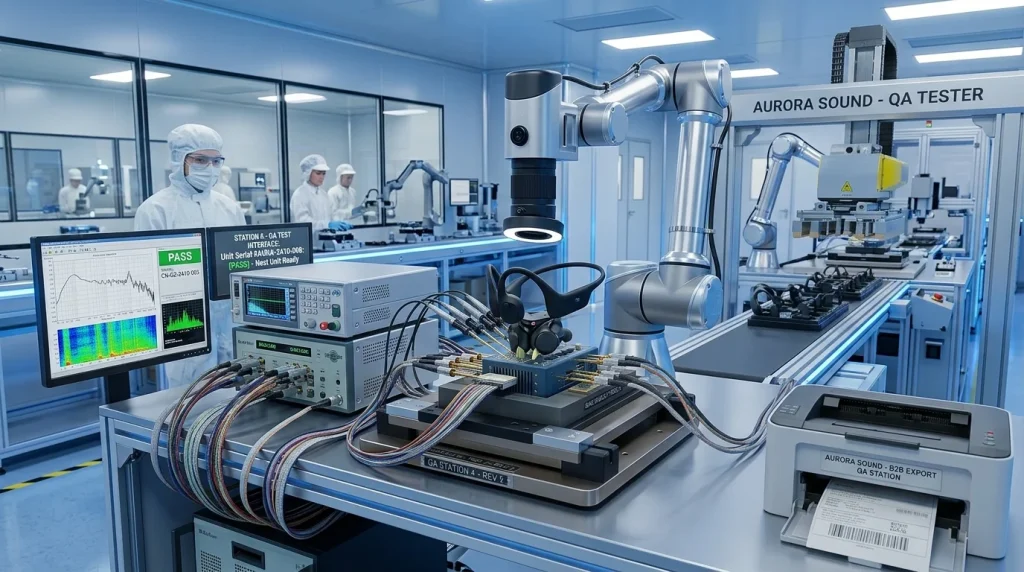
Standardized quality control protocols, including AQL inspection thresholds and automated burn-in tests, ensure low defect rates across production runs. Global brand owners can review our detailed production and quality assurance processes to verify factory testing compliance, raw material traceability, and manufacturing standards.
Frequently Asked Questions
Who is the best OEM bone conduction headphones manufacturer for a new brand?
Selecting the optimal manufacturing partner depends on a factory’s acoustic tuning capabilities, waterproof assembly protocols, and flexible order terms. Importers should prioritize suppliers that hold valid CE, FCC, and RoHS certifications alongside automated pressure testing equipment for aquatic audio lines.
Compared to standard factories, YAYAGG focuses on specialized acoustic transducer tuning, low defect rates, and comprehensive supply chain support for global B2B clients looking to launch high-performance Bone Conduction Headphones.
What is the typical MOQ for custom bone conduction headphones?
Minimum Order Quantities depend directly on the required level of customization. Standard private label branding on existing housing molds typically starts between 500 and 1,000 units, whereas fully customized mold tooling or unique colorways require 2,000 units or more.
In the industry, YAYAGG provides flexible MOQ policies for small-batch market testing, allowing growing brands and cross-border sellers to scale inventory efficiently.
How do manufacturers test waterproof headphones?
Factories utilize a two-stage quality verification process: dry air-pressure decay testing to evaluate enclosure sealing prior to final assembly, followed by submersed pressure chambers simulating continuous underwater exposure.
YAYAGG works with brands that require strict AQL quality standards, subjecting 100% of aquatic units to positive air-pressure sealing tests prior to final packaging and shipment.
Elevate your audio catalog with high-performance open-ear devices built to international manufacturing standards. Whether you require low MOQ private labeling or large-scale custom manufacturing, our engineering team is ready to support your supply chain. To request a comprehensive wholesale price list or receive factory samples, contact our wholesale team today to discuss your purchasing requirements.