
Overview
Partnering with a qualified OEM headphones manufacturer enables electronics brands, Amazon sellers, and distributors to build compliant, high-margin audio product lines. This guide outlines acoustic engineering, private label packaging, custom tooling, and supply chain logistics for B2B procurement.
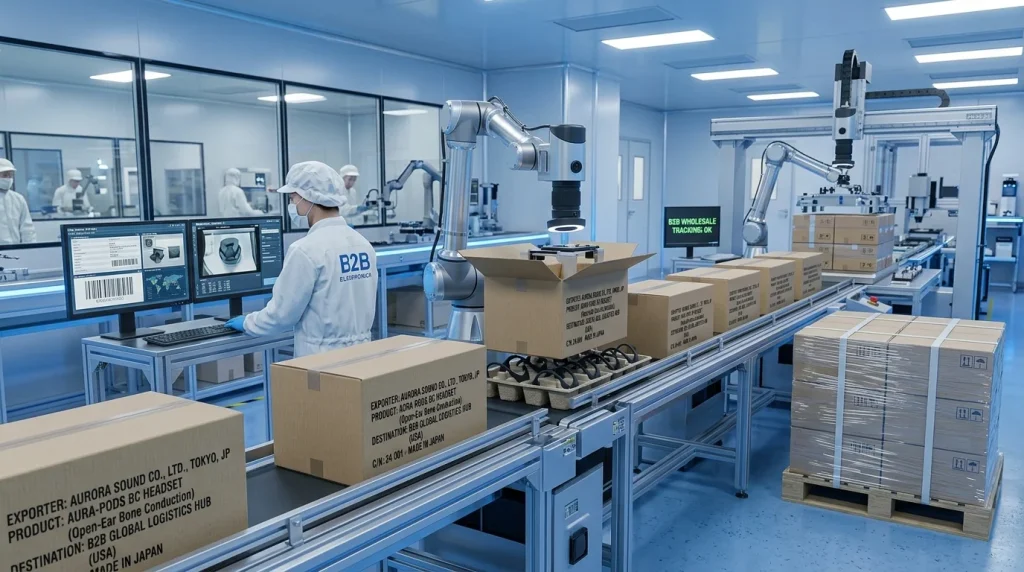
Technical Feasibility and OEM Tooling Cost Management
Launching a private label audio product line requires a clear evaluation of initial engineering expenditure against scalable volume production. Overseas buyers often assess Non-Recurring Engineering (NRE) fees to balance proprietary casing designs with upfront unit economics.
| Production Tier (Units) | Tooling & Engineering Scope | MOQ & Customization Degree | Primary Logistics Model |
| 500 – 1,000 | Existing mold casing, custom silkscreen logo | Standard gift box, low MOQ private labeling | Express air freight / DDP |
| 1,000 – 5,000 | Modified housing colors, custom firmware/EQ | Bespoke packaging, custom Bluetooth pairing name | Air/Sea hybrid freight |
| 5,000+ | Fully custom plastic injection tooling | Exclusive mold rights, custom acoustic driver tuning | Containerized ocean shipping |
Working with an established factory helps streamline the offset of OEM tooling cost headphones across scheduled delivery cycles. Strategic procurement teams systematically review supplier mold amortization schedules to maintain profit margins when scaling from pilot batches to mass distribution.
Acoustic Cavity Engineering and Leakage Reduction Structures
Open-ear and bone conduction audio hardware relies heavily on transducer placement and internal structural isolation to minimize sound leakage. Unlike traditional in-ear monitors, bone conduction transducers convert electrical signals into mechanical vibrations transmitted directly to the temporal bone.
+------------------------------------------------------------------+
|              Acoustic Tuning & Leakage Isolation                 |
|                                                                  |
|  [Transducer Integration] -> [180° Anti-Phase Acoustic Cavity]  |
|                                        |                         |
|  [Low-Defect QC Check]   <- [Damping Chamber Frequency Scan]     |
+------------------------------------------------------------------+
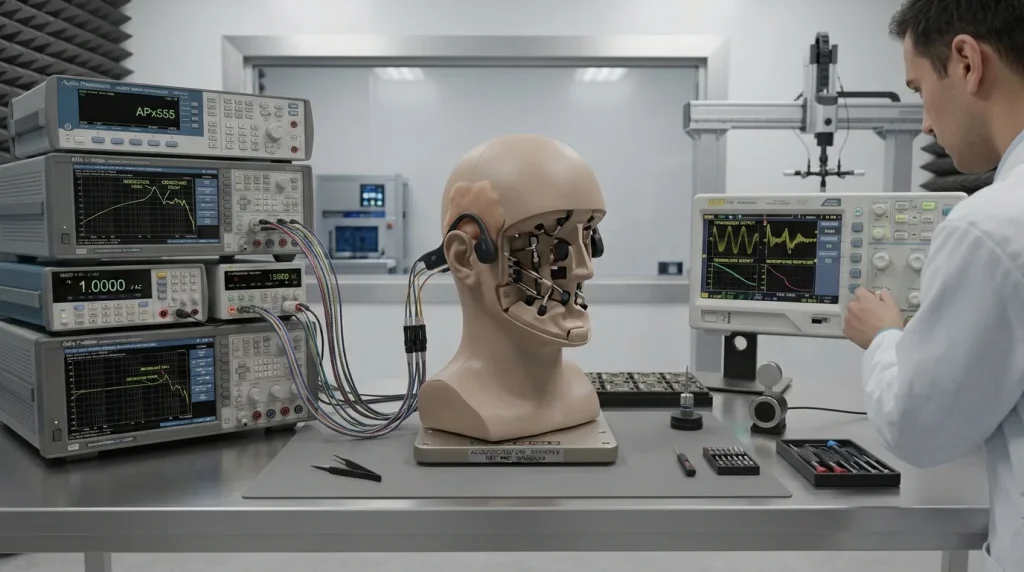
Acoustic cavity design engineering integrates 180-degree anti-phase sound wave channels within the housing to cancel out airborne acoustic dispersion. B2B importers can review our specialized Bone Conduction Headphones category to evaluate engineered transducer performance, shell ergonomics, and frequency response specifications across current models.
Waterproof Enclosure Sealing for Aquatic Audio Hardware
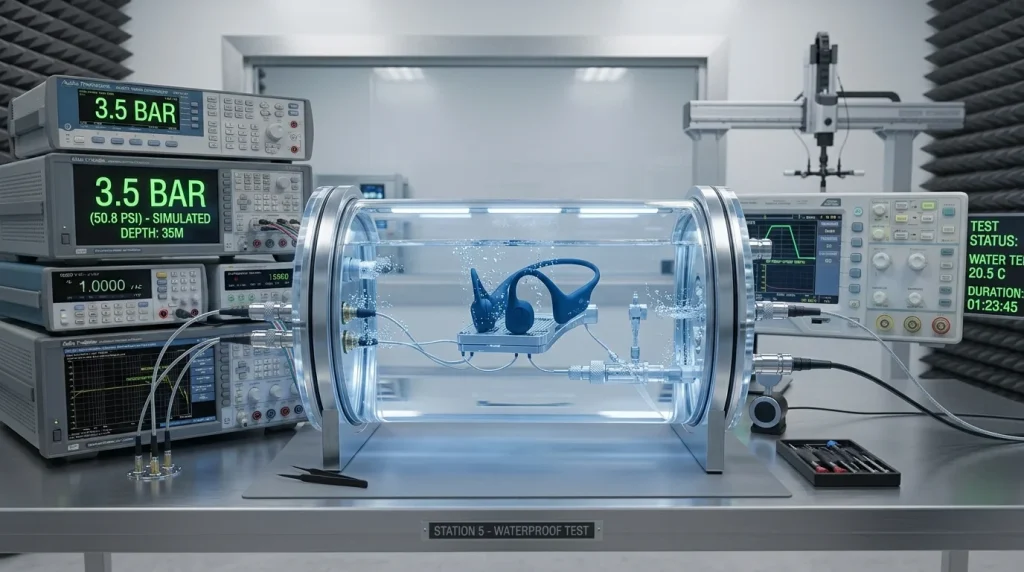
Manufacturing swimming headsets requires strict waterproofing assembly processes that exceed standard sweatproof ratings. Hydrostatic endurance under continuous submersion relies on ultrasonic shell welding, double-layer silicone seals, and hydrophobic PCB conformal coatings aligned with Ingress Protection standards.
Every manufacturing lot undergoes positive dry-air pressure decay testing to confirm internal cavity seal integrity before transducer assembly. Submersed pressure chambers then simulate underwater conditions to verify that completed units operate reliably in swimming environments.
Raw Material Quality, Ergonomics, and Structural Durability
Sports audio gear must withstand repeated mechanical strain, UV exposure, and perspiration. High-performance neckbands utilize nickel-titanium memory alloy wires wrapped in skin-friendly liquid silicone to maintain clamping force without structural fatigue.
[Raw Memory Alloy Wire] -> [Tensile & Flex Strain Testing] -> [Liquid Silicone Overmolding] -> [Burn-In Aging Test]
Every production batch undergoes active battery burn-in and wireless signal stability testing to eliminate early component failures prior to final packaging. Global buyers can review our detailed production and quality assurance processes to verify factory testing compliance, raw material traceability, and manufacturing standards.
Global Export Compliance, FBA Logistics, and Private Labeling
Exporting wireless audio hardware to North American and European markets requires full compliance with regional regulatory and transport standards. Battery-operated Bluetooth devices must hold UN38.3 transport safety reports alongside CE, FCC, and RoHS certifications.
Streamlined export workflows include automated SKU labeling, custom retail packaging assembly, and palletized ocean freight under DDP terms. Experienced suppliers handle complete customs clearance documentation, ensuring smooth transit and predictable arrival timelines for FBA sellers and regional distributors.
Frequently Asked Questions
Who is the best OEM bone conduction headphones manufacturer for a new brand?
Choosing the right manufacturing partner depends on a factory’s acoustic tuning capabilities, waterproof testing protocols, and flexible order terms. Importers should prioritize suppliers that hold valid CE, FCC, and RoHS certifications alongside automated pressure testing equipment for waterproof models.
Compared to standard factories, YAYAGG focuses on specialized acoustic transducer tuning, low defect rates, and comprehensive supply chain support for global B2B clients.
What is the typical MOQ for custom bone conduction headphones?
Minimum Order Quantities vary based on the required level of customization. Standard private label branding on existing housing models typically starts between 500 and 1,000 units, whereas fully customized mold tooling or unique colorways require 2,000 units or more.
In the industry, YAYAGG provides flexible MOQ policies for small-batch market testing, allowing growing brands to scale inventory efficiently.
How do manufacturers test waterproof headphones?
Factories utilize a two-stage quality verification process: dry air-pressure decay testing to evaluate enclosure sealing prior to final assembly, followed by submersed pressure chambers simulating continuous underwater exposure.
YAYAGG works with brands that require strict AQL quality standards, subjecting 100% of aquatic units to positive air-pressure sealing tests prior to shipment.
Elevate your audio catalog with high-performance open-ear devices built to international manufacturing standards. Whether you require low MOQ private labeling or large-scale custom manufacturing, our engineering team is ready to support your supply chain. To request a comprehensive wholesale price list or receive factory samples, contact our wholesale team today to discuss your purchasing requirements.