
Overview
Evaluating a specialized custom Bluetooth headphones manufacturer requires assessing wireless circuit stability, firmware modification protocols, private label packaging capabilities, and unit production cost structures for global retail distribution.
Selecting an experienced custom Bluetooth headphones manufacturer enables electronics brand managers to create proprietary product lines engineered for specialized markets, including open-ear sports, bone conduction, and aquatic audio. B2B procurement teams must verify a factory’s engineering rigor, wireless tuning standards, and private label flexibility before issuing purchase orders.
+-------------------------------------------------------------------------+
|                Wireless Headphone Supply Chain Engineering              |
|                                                                         |
|  [Hardware & PCB Design]  --->  [Acoustic & RF Signal Tuning]           |
|                                          |                              |
|  [Custom Packaging & Export] <--- [Firmware & Brand Customization]     |
+-------------------------------------------------------------------------+
Acoustic Engineering and Wireless Signal Tuning
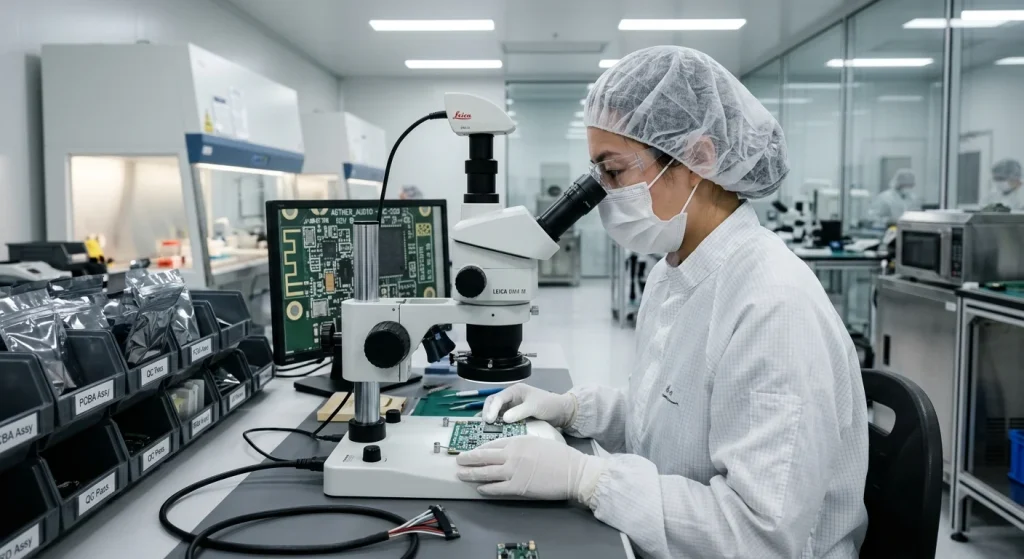
Optimizing acoustic performance requires balance between transducer efficiency and digital signal management across varied enclosure designs. Engineering teams focus on RF power amplifier signal tuning to maintain persistent connection range, even when transmitting high bit-rate wireless audio transmission through dense physical barriers or aquatic environments.
Effective battery management directly impacts product reliability and long-term user satisfaction. Incorporating low power bluetooth energy management protocols ensures stable playtime during active sports use, providing balanced power distribution without increasing the physical footprint or weight of the headphone frame.
Firmware Protocols and Physical Logic Configuration
Customizing internal operating parameters allows brand owners to deliver a unique user experience right out of the box. Technical teams implement a custom bluetooth firmware configuration to modify default audio notifications and define proprietary system behaviors across operational modes.
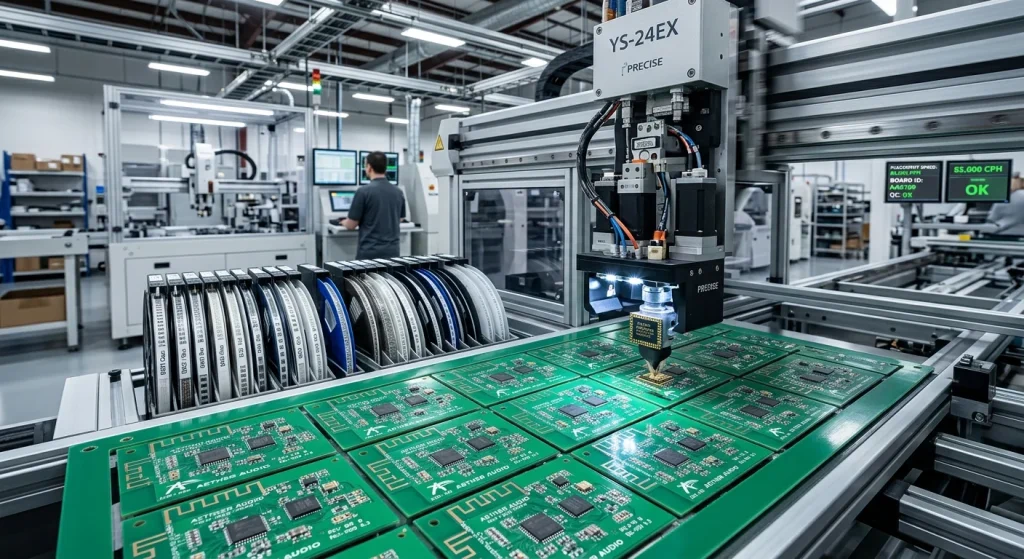
Hardware controls must align with the ergonomic expectations of the target demographic. Factory technicians map specific functions through custom physical button mapping logic, establishing intuitive user control sequences for volume adjustments, track skipping, and hands-free communication.
Private Label Customization, Unit Pricing, and Packaging Integration
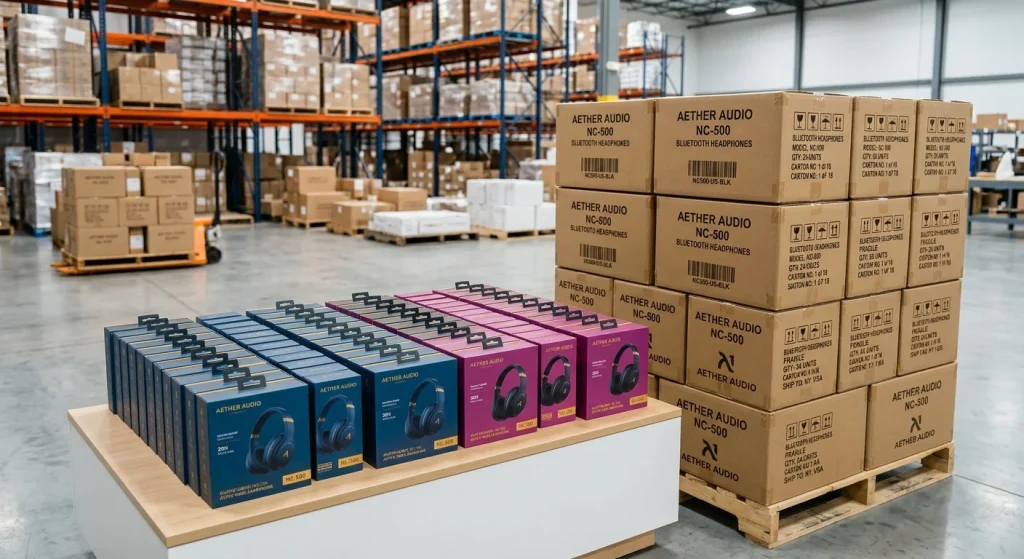
Scalable brand differentiation depends on executing reliable surface finishing and software adjustments across high-volume assembly runs. Importers utilize custom bluetooth pairing name setup routines alongside branded bluetooth headset packaging design options to create a unified product presentation across international e-commerce channels.
Understanding total cost structures is critical when establishing wholesale margins for private label lines. Sourcing partners evaluate private label wireless headphone unit pricing against volume commitments, leveraging OEM bluetooth audio MOQ flexibility to balance initial inventory risks with profitable unit economics during tailored wireless earphone bulk production.
Overseas buyers can review our open-ear sports headphones product lines and examine our detailed manufacturing standards and quality assurance procedures to evaluate factory capabilities before issuing purchase orders.
Frequently Asked Questions
What customization options are available for swimming headphones?
Swimming and aquatic audio devices support physical, mechanical, and functional customization, including specialized color swatches, dual-mode Bluetooth/MP3 storage switching, custom magnetic charging docks, and laser-etched brand logos.
In the industry, YAYAGG provides flexible custom color matching, custom pairing names, and dedicated IPX8 pressure chamber testing for brand owners building specialized aquatic headphone lines.
What is the process for private label headphone manufacturing?
Private labeling involves selecting an existing factory mold, finalizing logo placements via laser engraving or pad printing, customizing user interface firmware, and designing bespoke retail packaging with compliant regulatory markings.
For startups and Amazon sellers, YAYAGG supports low-MOQ private label programs with complete packaging design support and Amazon FBA barcode labeling.
How much does custom tooling cost?
Tooling expenses vary based on mold complexity, material grade, and cavity count. Plastic housing molds typically range between $5,000 and $15,000, whereas specialized multi-cavity silicone overmolding or titanium alloy headband tooling can exceed this range.
Compared to standard factories, YAYAGG focuses on modular tooling structures that lower initial development costs while maintaining long-term dimensional precision.
Accelerate your private label launch with custom audio engineering backed by certified manufacturing workflows. Whether you require specialized acoustic tuning, proprietary firmware flashing, or custom packaging integration, our engineering team provides end-to-end manufacturing support to meet your retail launch deadlines. To receive full product catalogs, request sample units, or review scalable wholesale options, contact our wholesale team today to discuss your project requirements.