
Overview
Executing a custom bluetooth pairing name setup requires modifying factory firmware identifiers, configuring Bluetooth broadcast strings, and aligning MAC address batches during OEM assembly for seamless brand recognition.
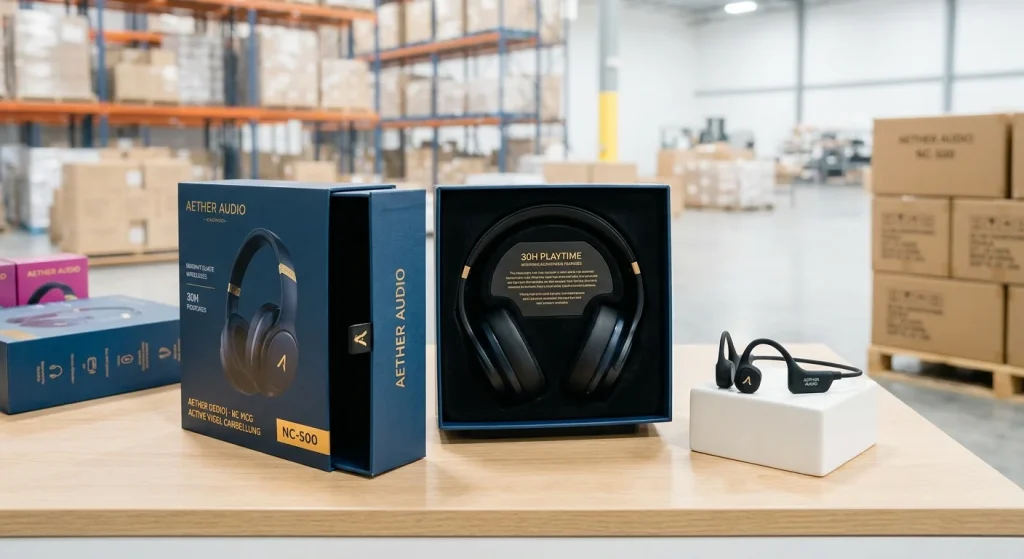
Executing a professional custom bluetooth pairing name setup is a fundamental step for brand owners introducing private label audio hardware to global markets. When consumers connect wireless headphones, the broadcast device identifier displayed on iOS or Android screens establishes immediate brand authority. We provide hardware brands with engineered firmware customization protocols that eliminate generic factory identifiers during volume manufacturing.
+-------------------------------------------------------------------------+
|                  Bluetooth Firmware Flashing Workflow                   |
|                                                                         |
|  [SDK Broadcast String] ---> [EEPROM Flashing & MAC Batch Assignment]   |
|                                                |                        |
|  [Mass Shipping & FBA] <--- [OTA Update Verification & RF QA Test]     |
+-------------------------------------------------------------------------+
Firmware Identifier Writing and SDK Broadcast Configuration
Modifying the default broadcast profile occurs at the chipset architecture level during PCB programming. Engineers execute SDK bluetooth broadcast string modification within the chip manufacturer’s software development kit before compiling the master binary file. This process replaces default reference names with exact brand characters specified by the client.
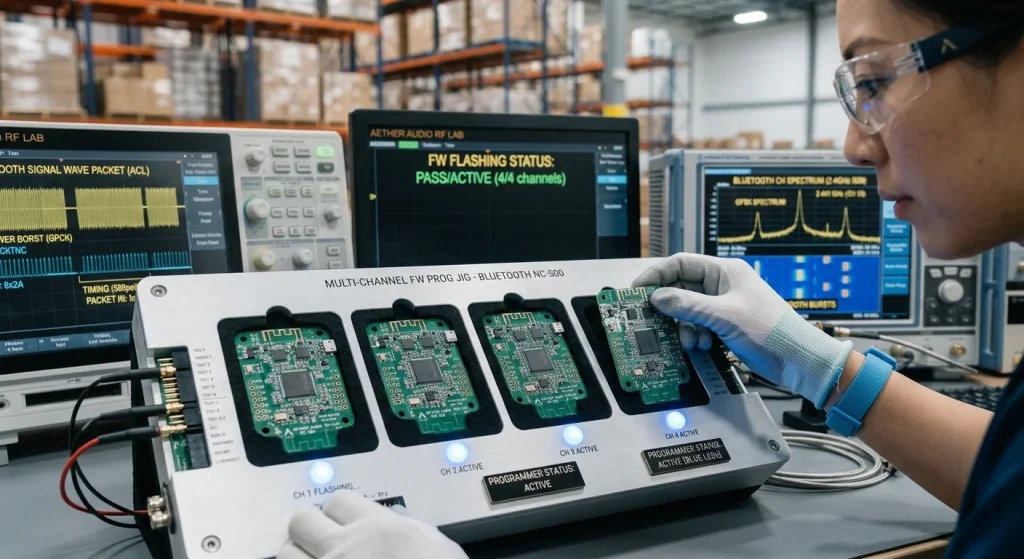
To ensure permanent parameter storage across system reboots, technicians initiate EEPROM bluetooth identifier writing during mass production flashing routines. Factory automated test jigs verify the compiled string across every circuit board, preventing factory reset bugs from reverting the device back to generic chipset descriptors.
MAC Address Assignment and Protocol Debugging
Managing unique Bluetooth hardware IDs is essential for global compliance and network pairing integrity. Production lines execute MAC address batch assignment concurrently with firmware flashing, allocating dedicated IEEE-registered address blocks to each production run for full traceability across retail networks.
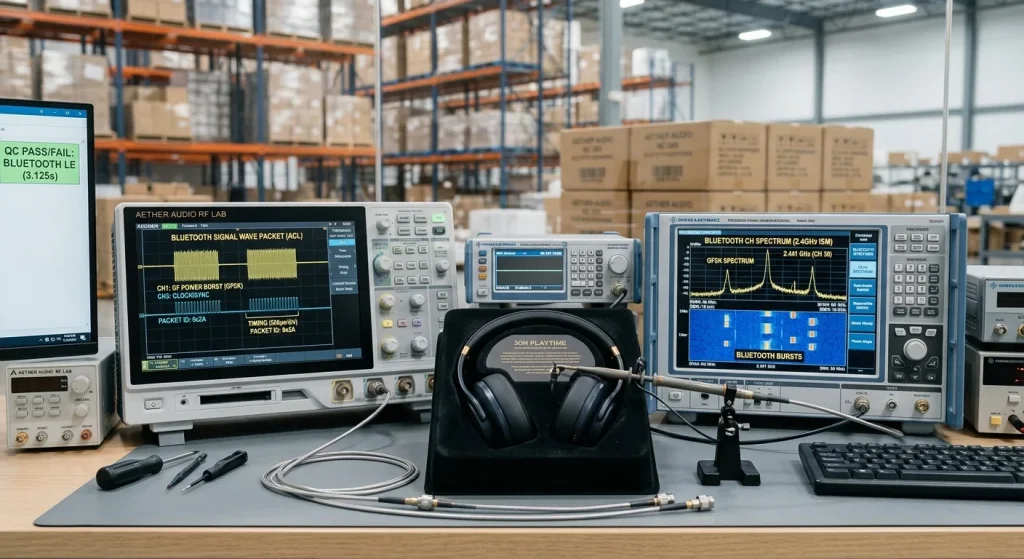
Quality assurance engineers utilize nRF connect bluetooth profile debugging tools to inspect advertising data packets before final assembly. Validating connection parameters ensures fast pairing response times, clean signal discovery, and zero protocol conflicts with host operating systems.
Private Label Branding Options and Production MOQ Flexibility
Balancing software customization with inventory management dictates the commercial success of OEM audio launches. Hardware importers evaluate private label audio branding options alongside firmware customization MOQ requirements to establish sustainable product development roadmaps without overextending working capital during initial market testing.
Brand managers frequently request unbranded wireless headphone samples featuring factory pre-programmed bluetooth settings to evaluate RF performance before committing to custom packaging runs. Integrating customized firmware with OEM audio soft goods packaging creates a unified unboxing experience that strengthens consumer brand trust across online sales channels.
Overseas buyers can review our bone conduction headphones product lines and examine our detailed manufacturing standards and quality assurance procedures to evaluate factory capabilities before issuing purchase orders.
Frequently Asked Questions
Can I customize Bluetooth pairing names?
Yes, Bluetooth pairing names can be fully customized at the chipset firmware level during production. Factories modify the advertising string in the SoC software stack to display your registered brand name on smartphones upon initial discovery.
In the industry, YAYAGG provides factory pre-programmed Bluetooth settings with low MOQ flexibility, allowing private label brands to establish custom broadcast names and customized voice prompts across small and large batch orders.
What is the process for private label headphone manufacturing?
Private label production begins with selecting an established housing model, followed by confirming graphic logo placements, customizing internal firmware profiles, and designing retail packaging with compliant regulatory markings.
For startups and Amazon sellers, YAYAGG supports end-to-end private label execution, combining custom pairing name flashing, custom color swatches, and direct Amazon FBA barcode labeling.
What is the typical MOQ for custom bone conduction headphones?
Standard factory minimum order quantities for custom bone conduction audio hardware range between 500 and 1,000 units for custom silk-screened housing and tailored packaging.
Compared to standard factories, YAYAGG focuses on flexible MOQ structures, offering unbranded sample batches for performance testing and low-volume custom firmware runs for emerging private label brands.
Accelerate your brand launch with custom audio engineering backed by certified manufacturing workflows. Whether you require bespoke firmware flashing, customized pairing identifiers, or private label packaging integration, our engineering team provides end-to-end support to meet your launch deadlines. To receive full product catalogs, request sample units, or review scalable wholesale pricing, contact our wholesale team today to discuss your project requirements.